
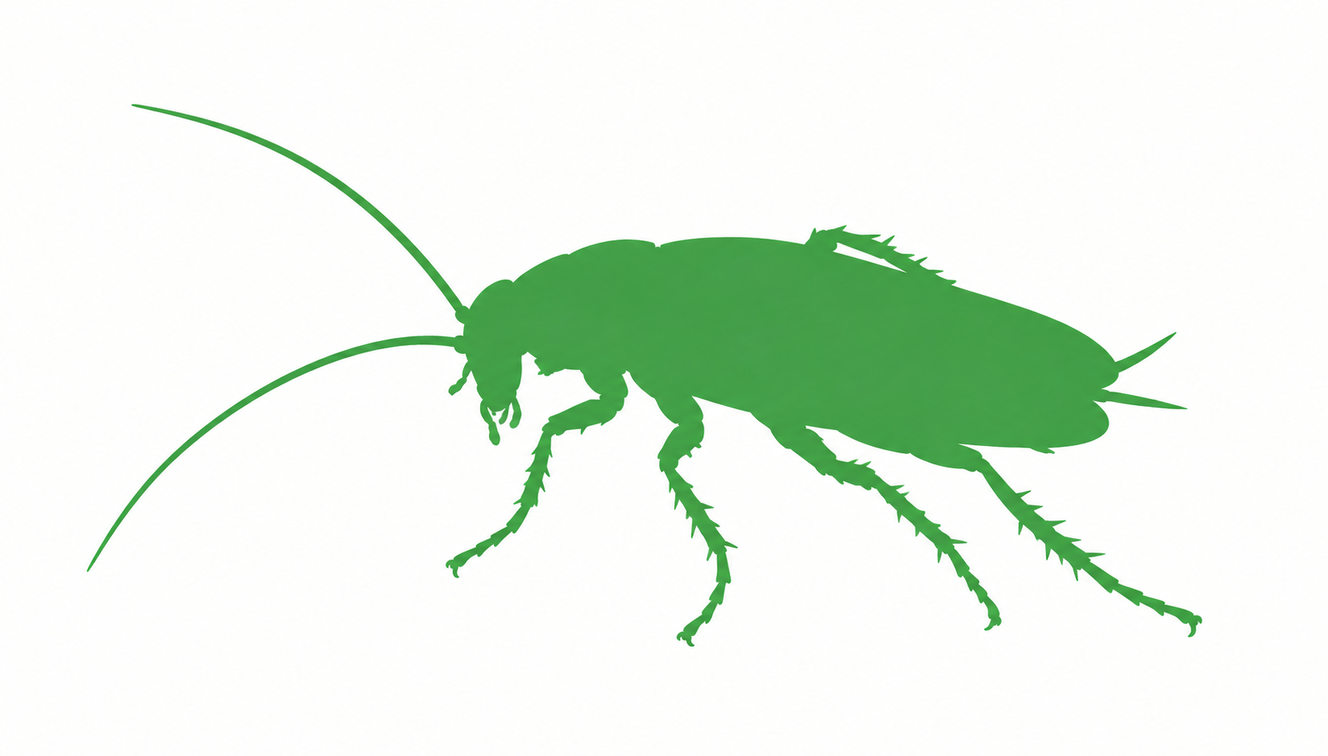
General Information About Cockroaches Scientific Name: Blattodea Length: Ranges from small to large Wings: Present in some species Legs: 6 legs Sounds: None
Cockroach Control
Cockroach Behavior
Cockroaches are social insects, and many species live in groups.
Cockroaches feed on a wide variety of materials and can carry disease-causing microorganisms that may cause food poisoning and other illnesses. These microorganisms may be transferred to food through the bodies or waste of cockroaches.
Materials produced by cockroaches, such as droppings and shed skins, may also cause allergies in some people. In addition, some species may carry substances that can trigger allergic reactions.
Cockroach Life Cycle
Female cockroaches lay their eggs inside a capsule containing a group of eggs. The female may carry this capsule or leave it in a suitable location until the eggs hatch.
After hatching, cockroaches enter the nymph stage. Nymphs resemble adult cockroaches but are smaller and do not have fully developed wings.
The nymphs gradually develop through several stages until they reach adulthood.
The duration of the cockroach life cycle varies depending on the species and surrounding conditions, such as temperature, humidity, and food availability.
Damage Caused by Cockroaches
Cockroaches can contaminate food and surfaces as they move between different areas. They may also carry bacteria and other contaminants.
Cockroach droppings and shed skins may cause allergic reactions in some people.
The presence of large numbers of cockroaches may also result in an unpleasant odor.
Cockroach Control
Cockroach control involves preventing their entry into buildings, reducing available food and water sources, and maintaining cleanliness.
Control measures also include treating their hiding and breeding areas and applying appropriate control methods according to the nature of the infestation and the site.