When You Need Crawling Insect Control
- Persistent ant trails leading to the kitchen or sugar containers.
- Recurring spiders and webs in ceiling corners, windows, and storage areas.
- Shiny silver insects that flee when you open book or clothing cabinets.
- Long, many-legged insects appearing in bathrooms or basements at night.
- Brown insects with pincers at their rear near gardens or planters.
- Insects returning after every household spray, suggesting a source outside or within walls.
Crawling Pests We Treat
Cockroaches
Among the most common and troublesome crawling pests. American cockroaches enter from drains, while German cockroaches breed in kitchens. See our separate Cockroach Control service for a detailed plan.
Ants
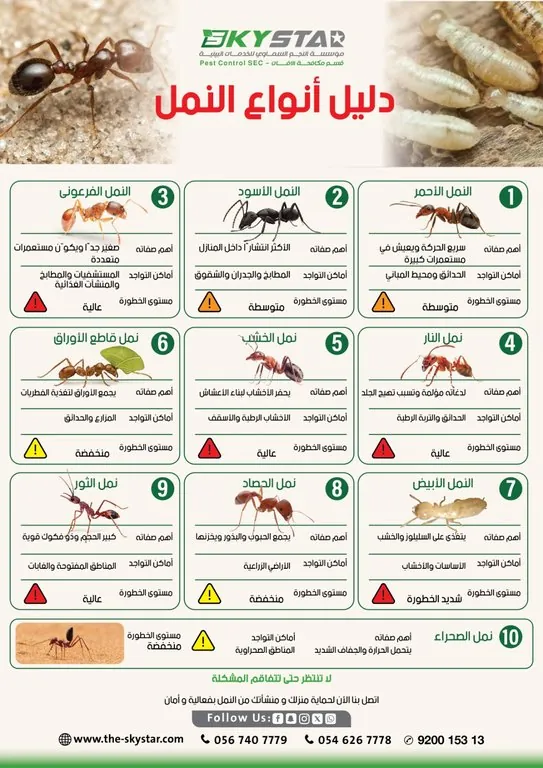
Ants are attracted to sugars, fats, and water. Spraying visible trails kills workers while the queen remains in the nest producing replacements. We therefore use baits workers carry back to the nest. See Ant Control.
Spiders
Most household spiders are not dangerous but indicate other insects they feed on. We remove webs, treat corners and storage areas, and address the insects attracting them.
Centipedes
They favor moisture and darkness, appearing in bathrooms, basements, and near drains. They feed on small insects and may bite if handled. Their presence often indicates excess moisture.
Silverfish
Small, silver, wingless insects that feed on starch, paper, glue, and some fabrics. They thrive in damp places and are common in Jeddah and Yanbu due to coastal humidity. They damage books, documents, and wallpaper.
Earwigs
They have pincer-like appendages at their rear and live in damp soil, beneath stones, and in planters. In summer, they enter homes seeking moisture. Their main damage is to plants, and they are not known to be dangerous to people.
Why Crawling Pests Are Common in the Hejaz Cities
- Heat: During long summers, insects seek cooler shelter and enter air-conditioned homes through any gap.
- Irrigation and gardens: Planters against walls create damp soil that attracts earwigs and centipedes.
- Jeddah's rains: Flooded soil nests drive ant colonies indoors.
- Basements and underground tanks: Common in Madinah and Makkah villas, they provide persistent moisture and darkness.
- Cracks: Tile joints, foundations, and gaps around air-conditioning pipes offer direct entry.
Damage
- Food: Ants contaminate exposed food, while cockroaches are associated with bacteria such as Salmonella.
- Property: Silverfish damage books, photographs, documents, and fabrics.
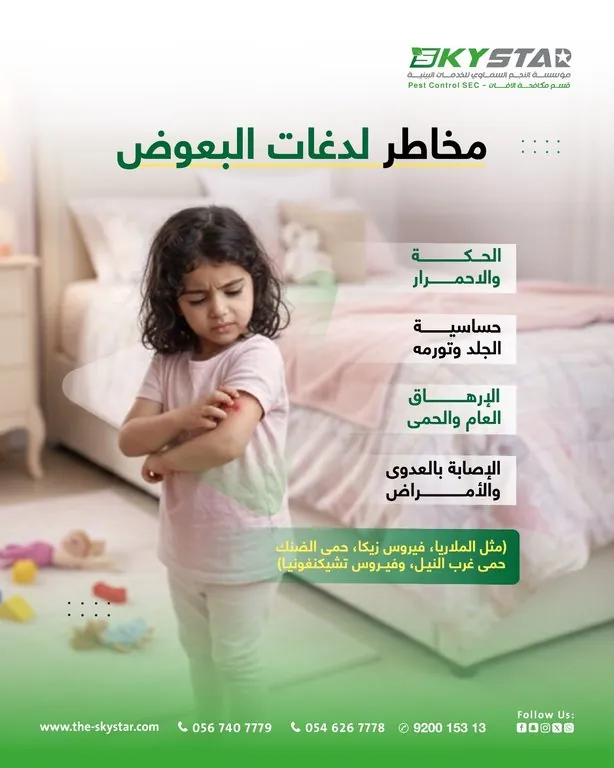
- Bites: Some ants and centipedes bite, causing pain and local swelling. Consult a doctor if allergic symptoms occur.
- Gardens: Earwigs and some ants damage seedlings and plants.
- Disturbance: Insects in bedrooms cause anxiety, especially where children are present.
The Building Perimeter Barrier
Most crawling pests come from outside, so treating indoors alone is insufficient. A perimeter barrier is a treated strip around the building that stops insects before they reach the wall. It includes:
- Foundation treatment: A 1–2 meter-wide strip around the building using a residual insecticide intended for outdoor use.
- Entrances: Door thresholds, garage entrances, and ventilation openings.
- External drains: Inspection chambers and garden drains.
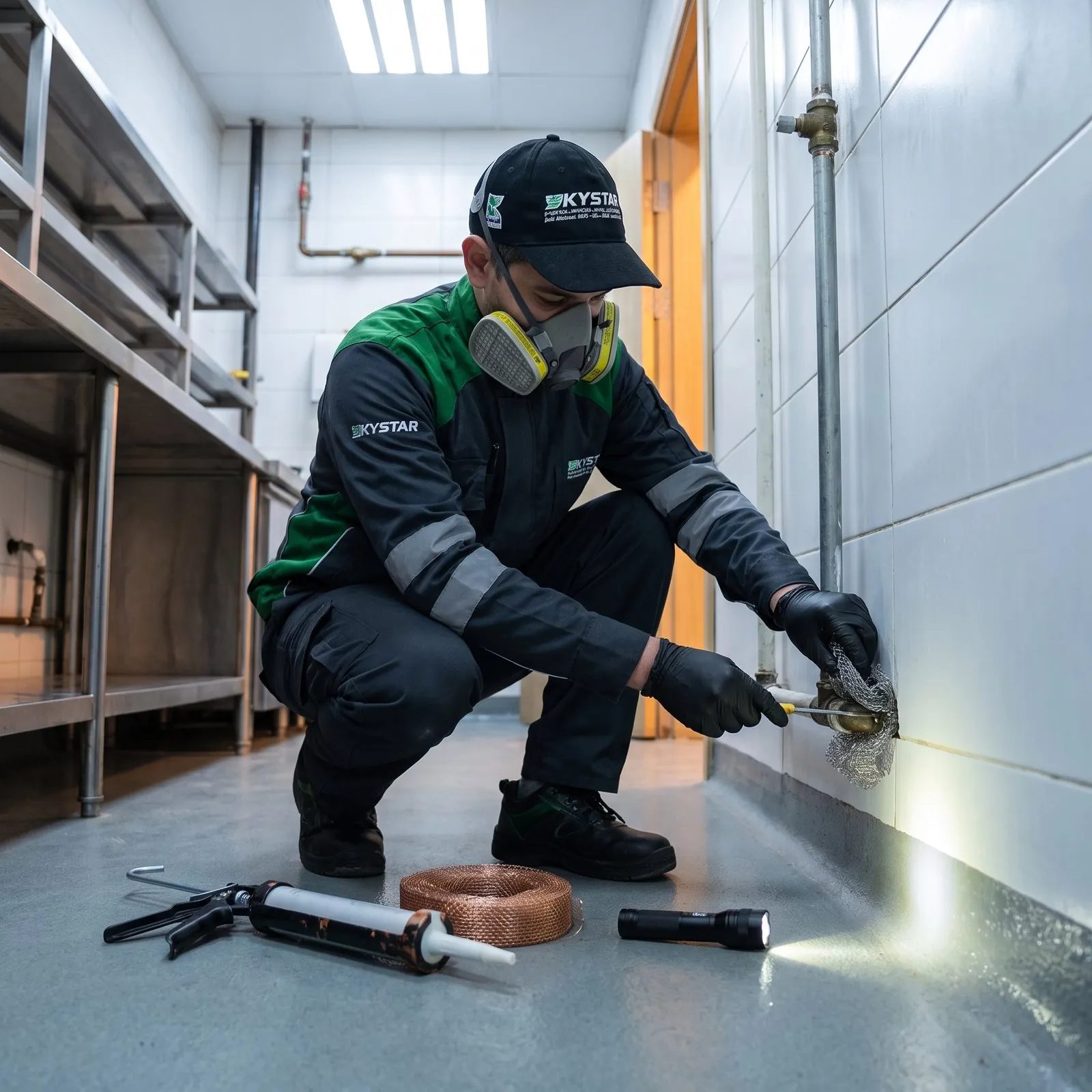
- Sealing openings: We identify cracks and pipe gaps and recommend sealing, or do it within the service as agreed.
- Removing shelter: We recommend keeping firewood, stones, and soil bags away from walls.
Our Process Step by Step
- Identification: We identify the pest precisely, since ant treatment differs from silverfish treatment.
- Tracing the source: We follow ant trails and inspect drains, basements, gardens, and damp areas.
- Indoor treatment: Baits and gels in cracks, dust in voids, and targeted edge spraying.
- Outdoor barrier: Treatment of the perimeter, entrances, and external drains.
- Report and recommendations: A list of moisture sources and openings needing repair.
Treatment by Area
| Area | Method | Product / Tool Type | When It Is Safe |
| Kitchen and ant trails | Bait along ant routes | Gel or granular ant bait | Immediately; do not wipe bait spots for 24 hours |
| Bookcases and cabinets | Crack and void treatment | Insecticidal dust for voids | After 3–4 hours |
| Bathrooms and drains | Treatment of drains and edges | Residual insecticide and insect growth regulator (IGR) | After 3–4 hours |
| Basement and storerooms | Targeted spraying and glue traps | Residual insecticide and monitoring traps | After 3–4 hours; 6 hours for vulnerable groups |
| Building perimeter and garden | Perimeter barrier | Residual insecticide for outdoor use | After the surface dries, 2–3 hours |
Crawling Insect Control Prices
| Property Type | Approximate Price Range |
| Apartment (indoors only) | 230 –350 SAR |
| An entire floor or duplex | 350–600 SAR |
| Villa with perimeter barrier | 600–1100 SAR |
| Residential compound or facility | Contract based on area |
Try the Price Calculator for a quick estimate or request a free inspection.
Before and After the Service
Before the service: Avoid spraying household insecticides on ant trails for several days before the visit; this disperses the colony and makes tracing harder. Move belongings away from basement and storeroom walls. Trim vegetation against walls.
After the service: Stay out of sprayed areas for 3–4 hours for adults and 6 hours for infants, pregnant women, older adults, people with respiratory conditions, and pets. Do not wipe edges for 24 hours or water the perimeter strip on the first day. Ant activity may increase for two days as they carry bait back to the nest. See the instructions before and after pest control.
Guarantee
The service includes a 30-day guarantee for treated insects. If activity returns in treated areas, we return and treat at no charge, provided recommendations on moisture and openings have been followed. See the Guarantee page.
Prevention Tips
- Reduce moisture: Repair sink and air-conditioning leaks and use the bathroom extractor fan.
- Keep plants at least 50 cm from walls and reduce irrigation near foundations.
- Store books and documents in closed plastic containers in damp areas.
- Wipe ant trails with soap and water to remove the chemical trail they follow.
- Fit pest barriers beneath exterior doors and screens over drains.
When are these measures insufficient? Ants emerging from tile or wall cracks, or recurring centipedes, suggest a source within foundations or drains needing specialist treatment. Learn about ants in our Pest Library.
Frequently Asked Questions
Q: Is spraying the ant trail enough?
No. Spraying kills visible workers while the queen remains. Workers carry baits into the nest, so we use them alongside perimeter spraying.
Q: Are household spiders dangerous?
Most are not dangerous. Large numbers indicate plentiful insect prey, so we treat both.
Q: Why do silverfish appear even in a clean home?
They depend on moisture rather than dirt. Reducing humidity in storage areas and bathrooms is the most important prevention step.
Q: How long does a perimeter barrier last?
Its effect lasts several weeks depending on sunlight, irrigation, and rain. In Jeddah, we recommend renewal after the rainy season.
Q: Is the barrier safe for gardens and animals?
We apply it to foundations and entrances rather than fruit-bearing plants and ask that animals be kept away until the surface dries.
Q: Do you treat crawling pests in facilities?
Yes, under Pest Control Contracts for schools, warehouses, and residential compounds, with monitoring traps and periodic reports.
Areas We Serve
We serve Madinah from Al-Aridh (0546267778), Makkah from Al-Lith Road (0543545708), and Jeddah from Al-Mushrifah (0543627774), as well as Yanbu, Taif, and AlUla. See our other services on Pest Control.