
Signs that need attention
- Frequent mosquito bites at night or at sunset, even inside air-conditioned rooms.
- Small larvae move in the water inside plant pots, exposed water tanks, and air conditioner water.
- Small, black and white striped daytime mosquitoes around the house need special attention.
- There are many flies in the kitchen despite the windows being closed.
- Small gray, butterfly-like flies on the bathroom walls near the drain; these are sewer flies.
- Flies gather around waste containers and garbage rooms in malls and restaurants.
Why are mosquitoes and flies so abundant in the cities of the Hijaz?
- Jeddah's coastal humidity: High humidity for most of the year creates a suitable environment for mosquitoes. More details on the Jeddah Pest Control page.
- Winter rains: Water collects in ditches, roofs, and construction sites, becoming breeding grounds within days.
- Water from air conditioners and exposed tanks: a constant source of stagnant water throughout the long summer.
- Rest areas and farms: unused swimming pools, irrigation basins, and animal watering troughs.
- Hajj and Umrah seasons: The density of restaurants and hotels and the amount of waste in Makkah and Madinah increase the proliferation of flies.
- Old drainage networks: Organic matter in drains is a breeding ground for sewer flies.
Damage and Risks
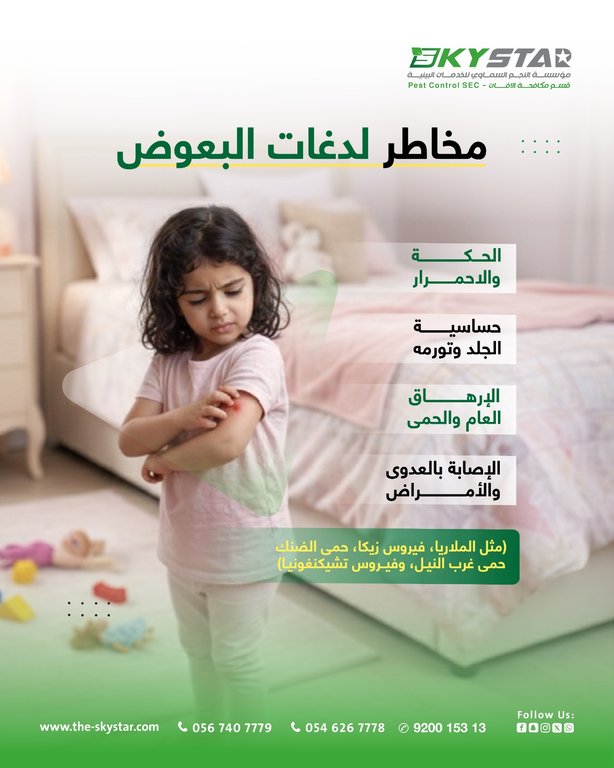
Mosquitoes: Their bites cause itching and irritation, and scratching can lead to inflammation. According to the World Health Organization, dengue fever is transmitted through the bites of certain types of Aedes mosquitoes, which typically bite during the day and breed in clean, stagnant water near homes. This is general information for awareness purposes; to learn about the symptoms and the health situation in your area, consult official health authorities in the Kingdom. If you develop a fever after mosquito bites, consult a doctor.
Houseflies: They move between garbage and food, and are associated with transferring germs to food and surfaces.
Sewer flies: more annoying than harmful, but their abundance means there is organic matter accumulating in the drain.
For food establishments: The presence of flies during inspection will result in violations. See the Food Safety Service.
Our step-by-step method
- Inspection: We walk around the place and identify the locations of stagnant water and sources of flies such as waste and drainage.
- Eliminating the sources: We recommend draining stagnant water, covering tanks, repairing leaks, and organizing waste.
- Larval treatment: We treat water that cannot be drained, such as drains, inspection chambers and basins, with materials specifically for larvae and IGR growth regulators.
- Outdoor fogging: For compounds, rest areas and gardens, we fog the places where adult mosquitoes rest, such as bushes and shade, preferably at sunset.
- Fly control: Spray on fly resting places around waste, and treat drains for sewer flies.
- Insect light traps and other traps: We install insect light traps and glue traps in the correct locations in kitchens and facilities.
- Follow-up and reporting: We review the traps and update the plan, and save the report in the client portal.
Treatment by Location
| Location | Method | Material Type | When will it be safe? |
| Drains and inspection chambers | Treating larvae in water | Larvicid and growth regulator IGR | After 1–2 hours |
| Gardens and shrubs | Outdoor mist spray | Pesticide designed for fogging | After 3–4 hours, and 6 hours for sensitive groups |
| Rest area and swimming pool | Fogging and treatment of exposed water | Fogging insecticide and larvicide | After 3–4 hours, and no swimming for 24 hours. |
| Waste containers and rooms | Spray on rest areas | residual pesticide | After 3–4 hours |
| Restaurant kitchens | Insect light traps and glue traps | Without spray | immediately |
| Bathrooms (sewage flies) | Cleaning and treating the drain | Product name: organic-matter treatment | After 1–2 hours |
Mosquito and fly control prices
| Property Type | Approximate price range |
| Apartment or small house | 230 –300 SAR |
| Villa with garden | 300–600 SAR |
| Private leisure property | 400–800 SAR |
| residential complex or facility | Periodic contract based on area |
| Installation of insect light traps and other traps for restaurants | According to the number of devices |
The price varies depending on the area, number of breeding sites, and type of service. Calculate your estimate using the price calculator.
Before and after service
Before the service: Close windows and doors overlooking the garden, cover fish tanks, and bring in pets and their food. Remove any laundry that has been hung out to dry.
After the service: Adhere to the 3–4 hour evacuation period for adults and 6 hours for infants, pregnant women, the elderly, those with respiratory conditions, and pets in sprayed areas. Do not wipe treated surfaces for 24 hours, and do not pour strong disinfectants down treated drains on the same day.
Refer to the pre- and post-pest control instructions for details.
Warranty
Our mosquito and fly control service includes a 30-day guarantee. If the problem returns in treated areas within the guarantee period, we return and treat them free of charge, provided you follow the instructions and remove the stagnant-water sources we identify. Since mosquitoes can fly in from outside the property boundary, the guarantee focuses on breeding sites within the treated area. Details are on the guarantee page.
Practical Home Prevention Tips
- Empty stagnant water weekly from saucers, buckets, and old tires, because the mosquito cycle from egg to adult can be completed in a matter of days in hot weather.
- Cover the water tanks tightly, and direct the water from the air conditioners into the drain.
- Install screens on the windows and repair any that are torn.
- Close the garbage bags tightly and take them out daily, and clean the container periodically.
- Do not leave food uncovered, especially ripe fruit.
- Clean the drains with a brush and hot water to remove the organic layer in which sewer flies breed.
- Use a mosquito repellent on your skin when sitting outside, and follow the instructions on its package.
These steps greatly reduce mosquitoes and flies. However, they are not enough if breeding grounds are in inspection chambers, shared spaces, or large compounds or rest areas. In these cases, specialized mosquito and fly control with a regular program is necessary.
Frequently Asked Questions
Q: Is fogging alone sufficient?
It reduces adult mosquitoes quickly, but its effect is temporary if the larvae continue to reproduce. Therefore, we always combine it with the treatment of stagnant water sites.
Q: Do you treat mosquitoes inside the apartment?
Yes, by treating the resting places and water sources locally, without heavy indoor fogging.
Q: Where should insect light traps be installed in a restaurant?
At the entrances and away from food preparation surfaces and exposed food, and at a suitable height, with regular cleaning and changing of their bulbs.
Q: Where do the small flies in the bathroom come from?
Drain flies often come from an organic layer inside the drain. Spraying alone is not enough; the drain needs to be cleaned and treated.
Q: Do I need periodic spraying?
Malls, rest areas, and restaurants benefit from regular visits, especially after Jeddah's rains and during the summer. The seasonal protection plan is suitable for them.
Q: Is outdoor spraying safe for bees and fish?
Avoid spraying flowering plants when bees are active, and cover or exclude fish tanks from spraying. Inform the technician of this before starting.
Areas We Serve
We offer mosquito and fly control services in Jeddah through our Al-Mishrifah branch (0543627774), Makkah through our Al-Laith Road branch (0543545708), and Madinah through our Al-Arid branch (0546267778), in addition to Yanbu, Taif, and AlUla. Read more in the Pest Library: Mosquitoes.