
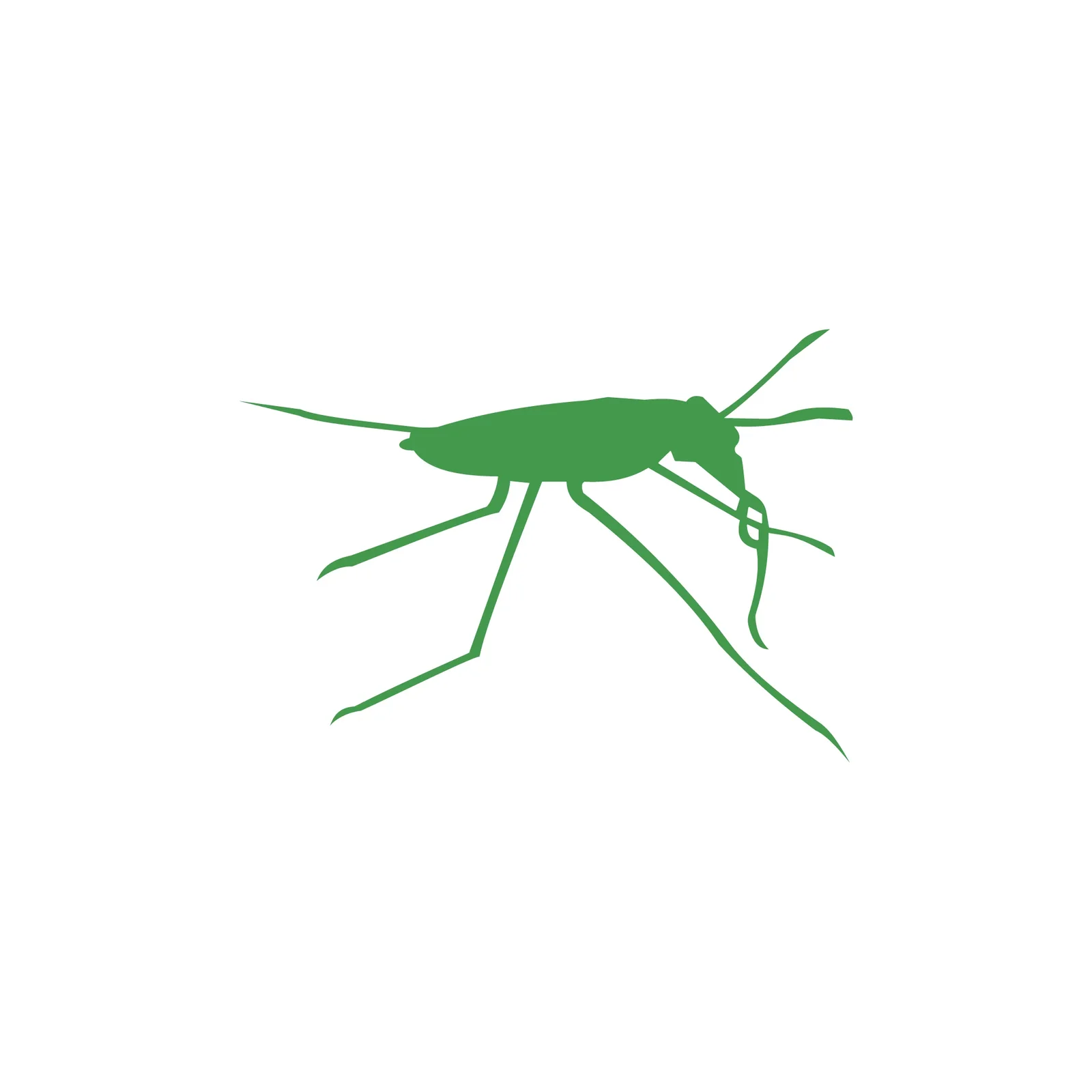
What Are Non-Biting Midges? Non-biting midges are small flying insects that resemble mosquitoes but differ from them in that they do not bite humans. They belong to the Chironomidae family, which includes more than 2,000 species. These species are not considered harmful to human health, but they may become a nuisance when present in large numbers around homes or in outdoor areas.
Morphological Characteristics of Non-Biting Midges
Adult
A small insect measuring approximately 1–4 mm in length.
The head is small and has large eyes.
They have long, slender antennae, which may be feathery in males.
Their wings are thin and transparent.
Their legs are long and slender, helping them fly and stand.
Thorax
The thorax bears the wings and legs and has a structure that helps the insect move and fly.
Life Cycle of Non-Biting Midges
The life cycle of non-biting midges passes through several stages:
Eggs
The female lays eggs in groups on water surfaces or rocks.
The eggs attach to water surfaces or areas close to them.
The eggs hatch within approximately 2–5 days.
Larva
The larvae live in stagnant water or moist soil.
They move with wave-like movements.
This stage lasts approximately 10–14 days before progressing to the next stage.
Pupa
The pupa resembles a small cocoon and floats near the surface of the water.
This stage lasts approximately 2–3 days.
Adult
The adult insect lives for a short period that may extend for several days.
It feeds only on sugary substances, such as flower nectar.
Adults gather noticeably around light sources.
Behavior of Non-Biting Midges
Although non-biting midges do not bite humans, they may cause a nuisance when they gather in large numbers, particularly around light sources.
Large numbers around homes and facilities may be particularly bothersome.
Non-Biting Midge Control
Technical Control
Designing lighting systems in a way that helps reduce midge تجمعation.
Using suitable light traps.
Reducing factors that encourage insects to gather around facilities.
Environmental Control
Avoiding stagnant water accumulation that may provide a suitable environment for midge breeding.
Managing moist areas that may help sustain their life cycle.
Importance of Non-Biting Midge Control
Although non-biting midges do not pose a direct health risk to humans, large gatherings around lights and homes may be a nuisance and may also affect the overall appearance of an area, particularly in tourist areas and facilities.