
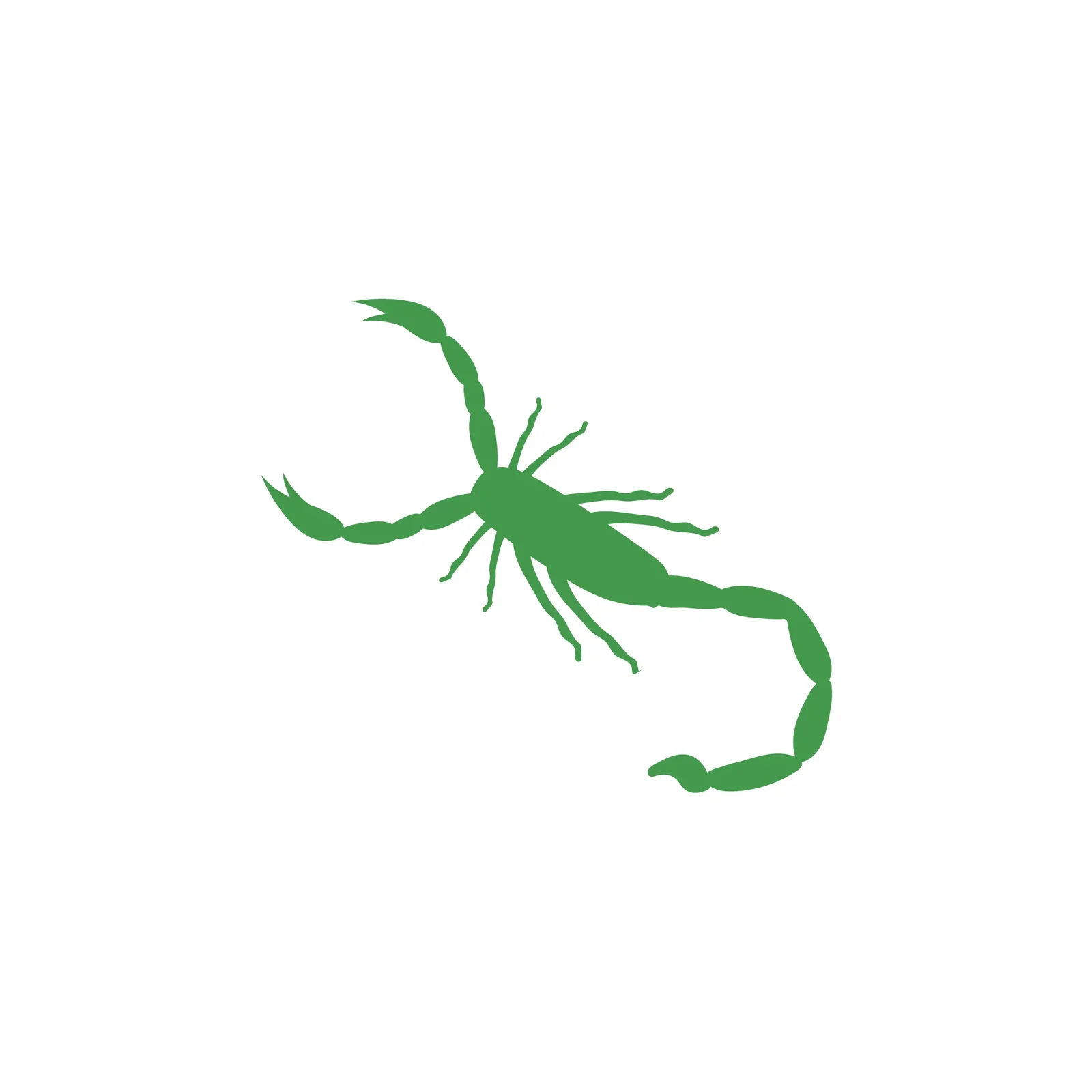
What Are Scorpions? Scorpions are organisms that belong to the class Arachnida, with various species that differ in size, color, and habitat. Scorpions are characterized by having eight legs, a pair of pincers, and a tail ending in a stinger used for defense and injecting venom.
Morphological Characteristics of Scorpions
A scorpion’s body consists of main parts that include the front part, abdomen, and tail.
Scorpions have eight legs and a pair of pincers, in addition to a tail divided into several segments and ending in a stinger.
Scorpions vary in size, color, and physical characteristics depending on the species.
Scorpion Life Cycle
Scorpions pass through several stages during their life cycle:
Reproduction
Scorpions reproduce sexually, and some details of the reproductive process vary depending on the species.
Birth of Young
Female scorpions give birth to live young and carry them on their backs during the initial period after birth.
Young Scorpions
Young scorpions pass through several stages of growth and molt several times until they reach adulthood.
Adult Scorpion
Once fully developed, the scorpion reaches adulthood and continues its life cycle and reproduction.
Scorpion Behavior
Scorpion behavior varies depending on the species and the surrounding environment.
Many scorpion species are active at night and may hide during the day in places that provide protection, such as cracks, under rocks, and other hiding places.
Scorpions feed on insects and other small organisms.
Risks Associated with Scorpions
The level of risk posed by scorpions varies depending on the species, and the effects of a sting may also vary from one case to another.
Scorpions use the stinger at the end of their tail to inject venom. Therefore, their presence near homes or facilities may pose a risk that requires appropriate handling.
Scorpion Control
Scorpion control begins with inspecting the site and identifying areas where scorpions are present or hiding, as well as factors that may contribute to their presence.
Control measures include reducing hiding places, removing waste and accumulated materials, maintaining the cleanliness of the site and its surroundings, sealing openings and cracks, and selecting the appropriate control method according to the nature of the site and the level of infestation.
Scorpion Prevention
Prevention involves maintaining the cleanliness of the site and surrounding areas, reducing hiding places, sealing cracks and openings that may allow scorpions to enter buildings, and regularly monitoring the site to detect any activity.