
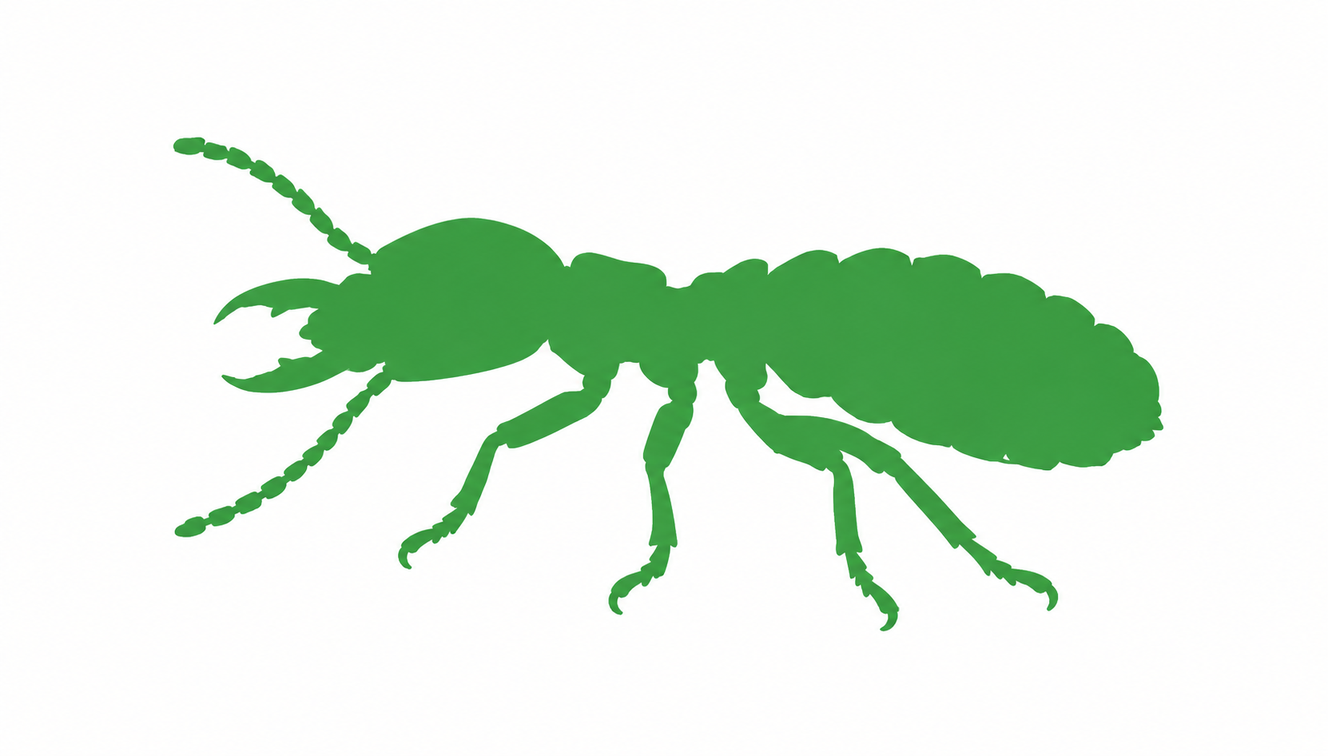
What Are Termites? Termites are a group of insects that feed on cellulose, the primary material found in wood, paper, cardboard, , and other similar materials and are characterized by a social system within the colony, where individuals are divided into groups, each with a specific role.
Termite Characteristics
Termites are social insects that live in organized colonies. Each colony consists of different groups, with each group performing a specific role.
A colony may contain large numbers of individuals, while the queen can live for many years and produce large numbers of eggs throughout her lifetime.
Termite Life Cycle
The termite life cycle passes through several main stages:
Eggs
The queen lays eggs inside the colony, where they are cared for and protected until they progress to the next stages of development.
Nymphs
After the eggs hatch, the termites develop into nymphs that pass through several growth stages before developing into one of the groups that make up the colony.
Termite Behavior
Termites communicate with other members of the colony through various signals, including chemical signals and vibrations.
These signals help colony members organize their different activities, such as searching for food or warning of potential dangers.
Social Castes of Termites
A termite colony consists of several castes, each with a specific role within the colony:
Queen
The queen is the primary individual responsible for reproduction within the colony and may continue producing eggs for long periods.
Workers
Workers make up the largest proportion of the colony and perform several tasks, including building tunnels, searching for food, and caring for the colony.
Soldiers
Soldiers are responsible for protecting the colony. Some types have strong jaws that help them defend the colony against threats.
Winged Termites
Winged termites are responsible for establishing new colonies. They leave the colony at specific times to begin a new reproductive cycle.
Pre-Construction Termite Control
Pre-construction termite control is a preventive measure that helps protect buildings from infestation.
Treatment involves applying appropriate control measures to the soil before the building is constructed, with the aim of creating a barrier that helps limit termites from reaching the building.
Post-Construction Termite Control
Termite infestations can be addressed after construction is completed by identifying areas of termite activity and their routes of spread, then selecting the appropriate control method according to the condition of the site.
Treatment may include the use of chemical barriers, baiting systems, or other methods appropriate to the nature of the infestation.
Termite Control
Termite control relies on a range of measures, including:
Insecticides
Using appropriate insecticides for termite control according to the nature of the site and the level of infestation.
Wood and Paper
Managing wood, paper, and other materials that may provide a suitable food source for termites.
Moisture
Addressing sources of moisture, as they may help create conditions suitable for termites.
Insulation and Maintenance
Paying attention to insulation and carrying out regular maintenance to help reduce conditions suitable for termite activity.
Termite Behavior
Termites communicate within the colony using different signals, including:
Vibrations
Used to alert the colony to potential danger.
Pheromones
Help identify food sources and regulate communication among colony members.
Termite infestations may be associated with certain issues, such as allergies or irritation in some individuals.