
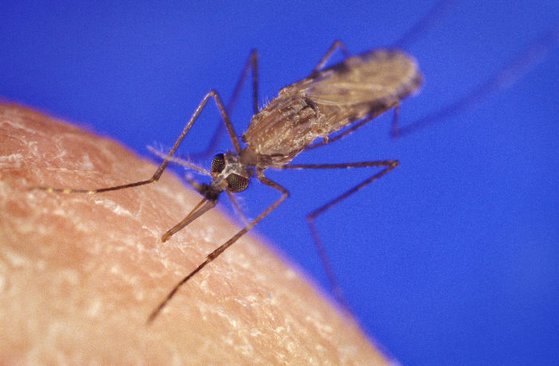
Scientific name: Anopheles gambiae Family: Culicidae Order: Diptera Risk level: Very high Category: Flying pest
?What is the African malaria mosquito
Scientific name: Anopheles gambiae
Family: Culicidae
Order: Diptera
Risk level: Very high
Category: Flying pest
The Anopheles gambiae complex (Anopheles gambiae s.l.) is described as one of the deadliest biological vectors in human history and is responsible for the highest concentration of malaria cases and deaths worldwide in sub-Saharan Africa. In Saudi Arabia and the Gulf, it is found in limited numbers in southern Yemen and the southwestern regions, but it is highly significant for facilities operating in Africa.
Life cycle of the African malaria mosquito
Mosquitoes undergo complete metamorphosis: egg, larva (four aquatic instars), aquatic pupa and adult. Larvae and pupae are entirely aquatic. In hot weather, a generation takes 7–14 days. Only the female takes blood meals, which are needed for egg development; males feed only on nectar.
Distribution of the African malaria mosquito
It is widespread in tropical and subtropical regions. In Saudi Arabia, the Gulf and Egypt, it occurs in different types of standing or warm water.
Damage and risks associated with the African malaria mosquito
It transmits Plasmodium falciparum, the deadliest form of malaria, as well as P. vivax and P. malariae. It is responsible for the vast majority of the 619,000 malaria deaths recorded worldwide each year.
Signs of an African malaria mosquito infestation
Signs include increasing numbers of adults in traps and larvae in standing water.
Where African malaria mosquitoes are found
They breed in clean surface water, including septic tanks, river and valley edges, agricultural furrows and small pools. They prefer relatively clear water, unlike Culex mosquitoes.
African malaria mosquito control methods
Survey and remove breeding sources (standing water). Use ULV fogging to control adults, biological larvicides (Bti) in standing water, and biological control with Gambusia fish.
African malaria mosquito control products
Use pyrethroids (deltamethrin and permethrin) to spray adults, Bti for biological larval control, and DEET/thiamethoxam for personal protection.
Requirements for controlling African malaria mosquitoes in food facilities
FSSC 22000/BRCGS: mosquitoes pose a high risk in food facilities. Standing water around the facility must be managed, and ILTs and protective window screens installed.
A fact about the African malaria mosquito
Carbon dioxide (CO₂), body heat and the odor of human sweat guide An. gambiae to its target with high precision. Research cited in the source indicates that people with blood type O are more attractive than those with type A or B, which may explain why some people seem to attract mosquitoes more than others.
Frequently asked questions about the African malaria mosquito
Q: How can I distinguish the African malaria mosquito from other mosquito species?
A: Microscopic examination of external appearance and eggs is the most accurate method. The Anopheles gambiae complex is a major malaria vector.
Q: Can mosquitoes be controlled without pesticides?
A: Yes. Removing breeding sources (standing water) is the strongest and longest-lasting approach. Biological Bti is very safe for the environment and effective against larvae