
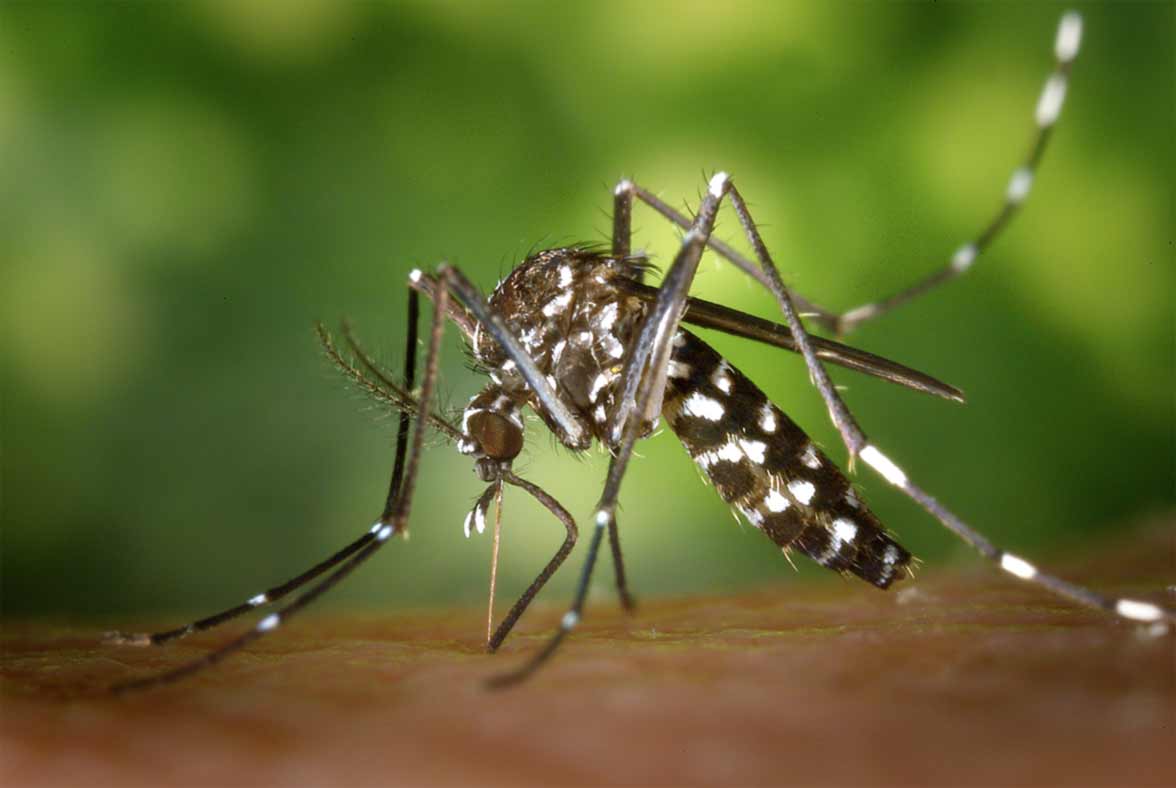
Scientific name: Anopheles stephensi Family: Culicidae Order: Diptera Risk level: Very high Category: Flying pest
? What is the Asian malaria mosquito
Scientific name: Anopheles stephensi
Family: Culicidae
Order: Diptera
Risk level: Very high
Category: Flying pest
Anopheles stephensi is a main malaria vector in the Middle East, the Gulf and South Asia. It is distinguished from other mosquitoes by its resting posture, with the rear of the body raised at a 45–90-degree angle. It is active at night. Its ability to adapt to urban environments and breed in large water tanks has made it an increasing threat in cities.
Life cycle of the Asian malaria mosquito
Mosquitoes undergo complete metamorphosis: egg, larva (four aquatic instars), aquatic pupa and adult. Larvae and pupae are entirely aquatic. In hot weather, a generation takes 7–14 days. Only the female takes blood meals, which are needed for egg development; males feed only on nectar.
Distribution of the Asian malaria mosquito
It is widespread in tropical and subtropical regions. In Saudi Arabia, the Gulf and Egypt, it occurs in different types of standing or warm water.
Damage and risks associated with the Asian malaria mosquito
It transmits malaria (Plasmodium falciparum and P. vivax), described in the source as the world’s most widespread deadly infectious disease. Saudi Arabia records cases in southern regions, including Asir and Jazan.
Signs of an Asian malaria mosquito infestation
Signs include increasing numbers of adults in traps and larvae in standing water.
Where Asian malaria mosquitoes are found
They occur in large water tanks, open wells, uncovered septic tanks, irrigation ponds and other large bodies of standing water.
Asian malaria mosquito control methods
Survey and remove breeding sources (standing water). Use ULV fogging to control adults, biological larvicides (Bti) in standing water, and biological control with Gambusia fish.
Asian malaria mosquito control products
Use pyrethroids (deltamethrin and permethrin) to spray adults, Bti for biological larval control, and DEET/thiamethoxam for personal protection.
Requirements for controlling Asian malaria mosquitoes in food facilities
FSSC 22000/BRCGS: mosquitoes pose a high risk in food facilities. Standing water around the facility must be managed, and ILTs and protective window screens installed.
A fact about the Asian malaria mosquito
An. stephensi has recently expanded from the Indian subcontinent into sub-Saharan Africa. This is a serious epidemiological event because African populations do not have acquired immunity to the species it transmits.
Frequently asked questions about the Asian malaria mosquito
Q: How can I distinguish the Asian malaria mosquito from other mosquito species?
A: Microscopic examination of external appearance and eggs is the most accurate method. Anopheles stephensi is a main malaria vector.
Q: Can mosquitoes be controlled without pesticides?
A: Yes. Removing breeding sources (standing water) is the strongest and longest-lasting approach. Biological Bti is very safe for the environment and effective against larvae