
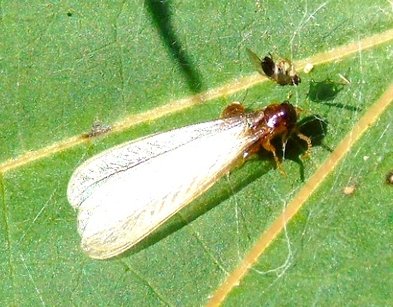
Scientific name: Coptotermes gestroi Family: Rhinotermitidae Order: Isoptera Risk level: Very high Category: Insect
? What is the Asian subterranean termite
Scientific name: Coptotermes gestroi
Family: Rhinotermitidae
Order: Isoptera
Risk level: Very high
Category: Insect
The Asian subterranean termite (Coptotermes gestroi), also known as the Indonesian termite, is one of the most dangerous invasive pests in the Arabian Gulf. It spread from Southeast Asia through port activity and maritime trade and has shown a strong capacity to attack structures in hot, humid climates. Its behavior resembles that of the Formosan subterranean termite, and it causes similar structural damage.
Life cycle of the Asian subterranean termite
Large colonies may contain millions of individuals. The queen lays thousands of eggs each day. Reproductive alates fly during humid seasons.
Distribution of the Asian subterranean termite
Native to Southeast Asia, it has invaded ports in the Arabian Gulf and coastal areas of India, the Americas and the Caribbean.
Damage and risks associated with the Asian subterranean termite
It causes structural damage to buildings near ports and damages wooden facilities and infrastructure.
Signs of an Asian subterranean termite infestation
Signs include mud tubes similar to those of other subterranean termites and wings accumulating around lights at night during the reproductive season.
Where Asian subterranean termites are found
They occur in soil near ports and buildings containing imported timber, and in foundations of buildings near maritime import areas.
Asian subterranean termite control methods
Closely inspect timber and furniture shipments at ports. Treat soil around at-risk buildings. Use professional baiting systems in areas around ports.
Asian subterranean termite control products
Fipronil for soil treatment, imidacloprid in baiting systems, and chlorantraniliprole.
Requirements for controlling Asian subterranean termites in food facilities
FSSC/BRCGS: this is a high-priority structural pest at facilities near ports. An annual inspection report is mandatory.
A fact about the Asian subterranean termite
C. gestroi is a notable example of an invasive pest that benefits from climate change. As temperatures rise in new regions and maritime trade increases, its geographic range is expanding rapidly.
Frequently asked questions about the Asian subterranean termite
Q: How can I tell whether the termites in my building are the Asian species rather than a local species?
A: Distinguishing species requires a specialist microscopic examination of the soldiers. It is always recommended to send samples to a specialist laboratory for accurate identification before setting a control plan.
Q: Is the Indonesian termite more dangerous than local species?
A: Generally, yes. It forms larger, more aggressive colonies and remains active across a wider temperature range in the Gulf climate, allowing it to stay active for longer during the year