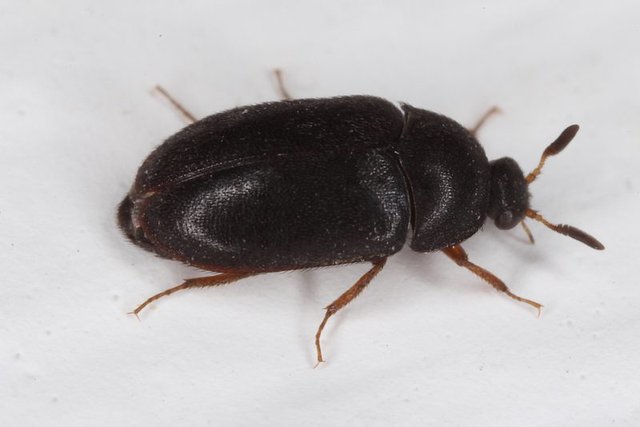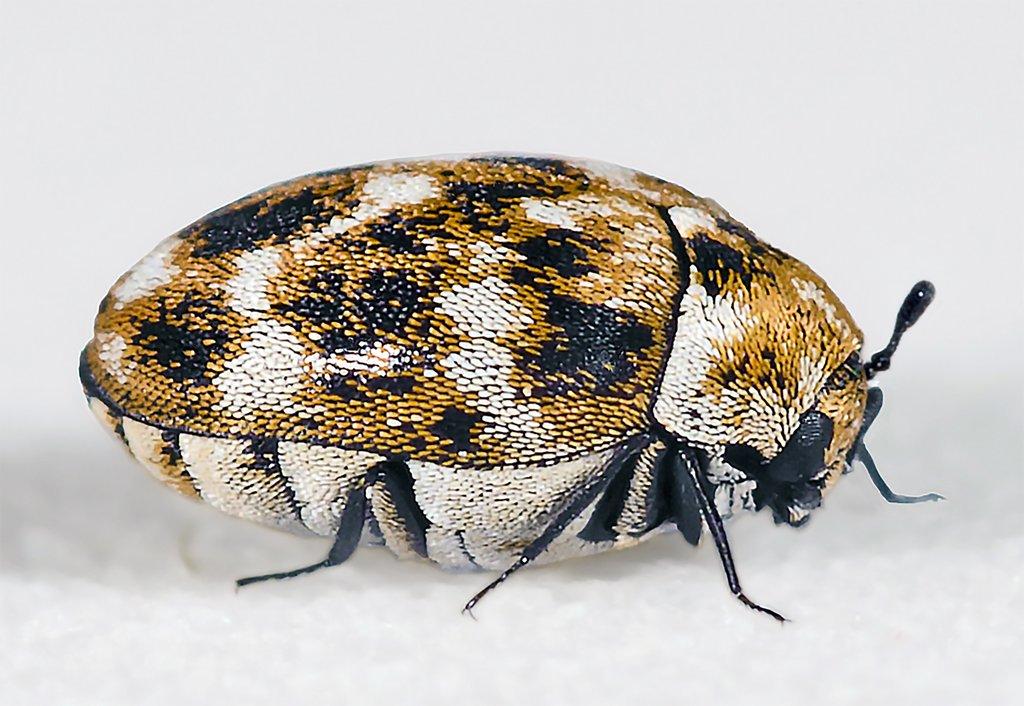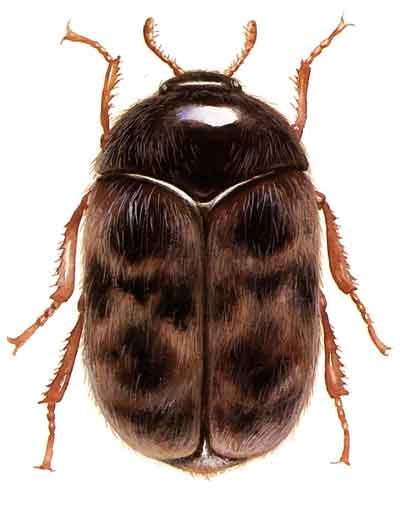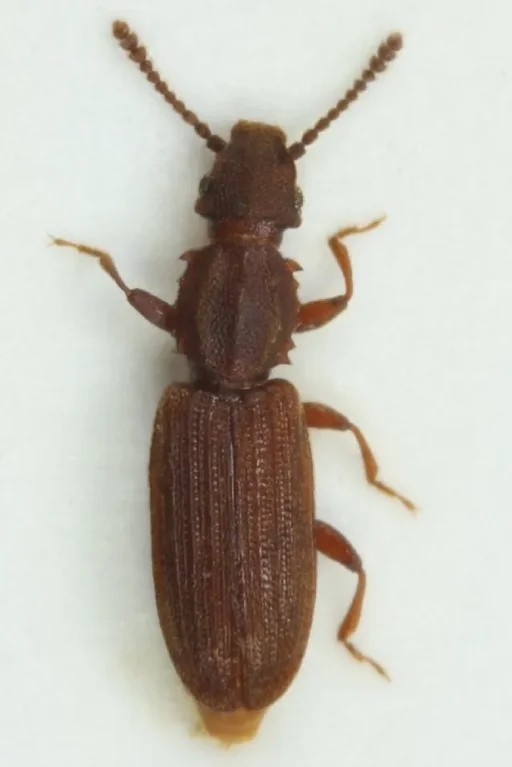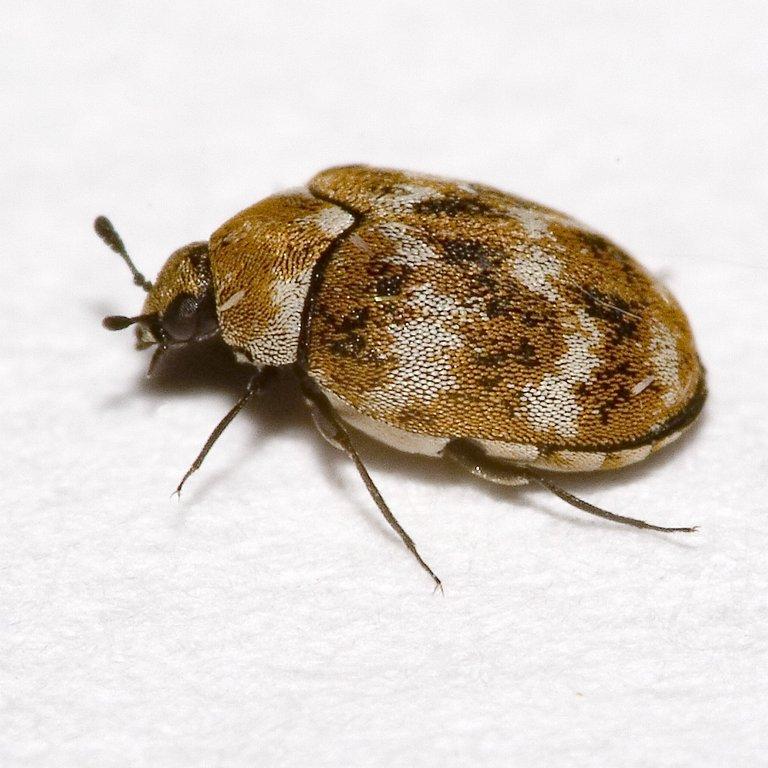
Scientific name: Anobium punctatum Family: Anobiidae Order: Coleoptera Risk level: High Category: Beetle
? What is the common furniture beetle
Scientific name: Anobium punctatum
Family: Anobiidae
Order: Coleoptera
Risk level: High
Category: Beetle
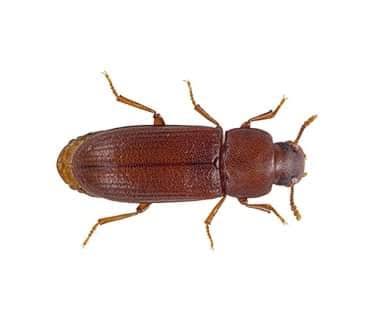
The common furniture beetle (Anobium punctatum), popularly called the woodworm, makes small round holes (1–2 mm) in manufactured wood. The adult is brown, measures 2.7–4.5 mm, and flies in spring and summer to lay eggs in cracks in wood.
Life cycle of the common furniture beetle
It undergoes complete metamorphosis. Eggs are laid directly on food, and the larva is the damaging stage. A full generation takes 4–8 weeks. Multiple generations may breed in an infested warehouse.
Distribution of the common furniture beetle
It occurs in food warehouses worldwide and is common in the Gulf, Saudi Arabia and Egypt, especially in hot warehouses.
Damage and risks associated with the common furniture beetle
It creates tunnels inside wood that weaken its structure over time, posing a risk to antique furniture, wooden frames and old ceilings.
Signs of a common furniture beetle infestation
Signs include adult insects around light sources; larvae and silken threads in food (moths); droppings and hollow grains caused by weevils and beetles; and small white eggs on food.
Where common furniture beetles are found
They occur in old wooden furniture, roof beams in heritage buildings, wooden panels and frames, and surface wood in damp areas.
Common furniture beetle control methods
Monitor with pheromone traps. Spray the warehouse with pyrethroids. Fumigate stored products with phosphine or methyl bromide. For physical control, lower the temperature below 10°C or raise it above 55°C. Rotate stock using FIFO.
Common furniture beetle control products
Pyrethroids for warehouses, phosphine (PH₃) for fumigation, deltamethrin for residual spraying and diatomaceous earth for grain.
Requirements for controlling common furniture beetles in food facilities
FSSC 22000 Version 7: stored-product pests are high priority. Pheromone traps with weekly documentation are mandatory. BRCGS: stored-product pests in a product constitute a major Non-Conformance.
A fact about the common furniture beetle
The adult produces a tapping sound by striking its head against wood during courtship and mating. This gave rise to the old English name “Death Watch Beetle,” because people heard it on quiet nights near a sick person’s bed.
Frequently asked questions about the common furniture beetle
Q: How do stored-product pests enter a facility?
A: Usually through incoming shipments. Carefully inspect samples from each shipment and quarantine new purchases.
Q: Is a low temperature enough to eliminate stored-product pests?
A: Yes. Temperatures below 10°C for two weeks stop reproduction and kill vulnerable stages. Temperatures below −18°C for three days kill all stages