
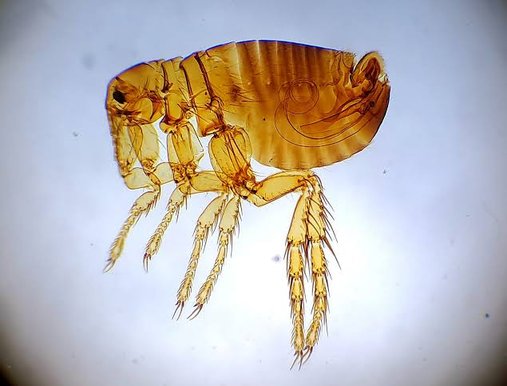
Scientific name: Pulex irritans Family: Pulicidae Order: Siphonaptera Risk level: High Category: Insect
? What is the human flea
Scientific name: Pulex irritans
Family: Pulicidae
Order: Siphonaptera
Risk level: High
Category: Insect
The human flea (Pulex irritans) has one of the broadest host ranges among fleas and infests humans, pigs, dogs, rodents and other animals. It measures 2–3.5 mm and is dark brown. Historically, it has been associated with slaughterhouses, agricultural facilities and densely populated environments. Its historical role in plague transmission was secondary to Xenopsylla but is documented.
Life cycle of the human flea
Its life cycle is similar to that of the cat flea. It prefers larger mammalian hosts.
Distribution of the human flea
It has historically been found worldwide. In Saudi Arabia, the Gulf and Egypt, it is associated with slaughterhouses, farms and densely populated residential environments.
Damage and risks associated with the human flea
It causes painful bites and allergic reactions, can transmit plague as a secondary vector, and can transmit Trypanosoma lewisi in some regions.
Signs of a human flea infestation
Signs include multiple bites on the body, no pets in the home (the host in this case is not a cat or dog), and a history of exposure to slaughterhouses or farm environments.
Where human fleas are found
They may be found in clothing and bedding in high-risk human settings, and near pig farms and slaughterhouses.
Human flea control methods
Treat the environment comprehensively, treat animal hosts and improve sanitation conditions.
Human flea control products
Use environmental pyrethroids with an IGR, and veterinary treatment for infested animals.
Requirements for controlling human fleas in food facilities
FSSC/BRCGS: include human fleas especially in control plans for slaughterhouses and meat-processing facilities.
A fact about the human flea
The human flea is one of the few species made historically famous by its role in epidemics. Medical manuscripts from the 17th century described methods for catching it and warned readers about it.
Frequently asked questions about the human flea
Q: What is the difference between the human flea and the cat flea?
A: The human flea prefers humans and pigs rather than cats. It is slightly larger, and the absence of pets does not mean it is absent. Accurate diagnosis requires microscopic examination