
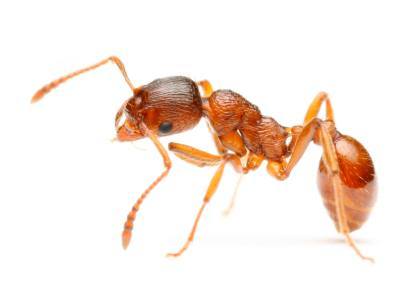
Scientific name: Monomorium pharaonis Family: Formicidae Order: Hymenoptera Risk level: Very high Category: Insect
? What is the Pharaoh ant
Scientific name: Monomorium pharaonis
Family: Formicidae
Order: Hymenoptera
Risk level: Very high
Category: Insect
The Pharaoh ant (Monomorium pharaonis) is among the most dangerous and difficult ants to control in healthcare and food facilities. It is extremely small (1.5–2 mm) and pale yellowish beige. Colonies have multiple queens and an exceptional ability to spread. When broad spraying is attempted, the colony can split and spread through a process known as budding, multiplying the infestation instead of reducing it. This behavior makes spraying alone harmful rather than helpful.
Life cycle of the Pharaoh ant
Colonies have multiple queens and no geographic boundaries. A queen lays 3,500 eggs in her lifetime. Development takes 38–45 days. There is no seasonal reproductive flight; all spread occurs through budding.
Distribution of the Pharaoh ant
Native to Africa, it has spread worldwide through trade. It occurs in heated facilities with abundant food sources throughout the Gulf countries, Saudi Arabia and Egypt.
Damage and risks associated with the Pharaoh ant
The greatest concern is its entry into sterile healthcare equipment, intravenous fluid lines and surgical wounds. It has been linked to documented cases of transmitting antibiotic-resistant pathogens in hospitals.
Signs of a Pharaoh ant infestation
Signs include very fine trails of tiny ants near food and moisture sources, especially at night. They may also appear inside clothing and medical equipment.
Where Pharaoh ants are found
They can occur anywhere warm and close to food and water, including behind ovens, in wall cavities near hot-water lines, inside electrical equipment and in the folds of hospital mattresses.
Pharaoh ant control methods
The golden rule is to use gel baits only—never spray. Place protein- and sugar-based baits at multiple points along trails, rotate baits regularly, and allow time for control (6–12 weeks for complete elimination). Seal moisture entry points and maintain good sanitation.
Pharaoh ant control products
Gel baits containing imidacloprid, abamectin or hydramethylnon work through a delayed transfer effect: the active ingredient is passed through the colony’s social feeding behavior to the queens. Pyrethroids are prohibited.
Requirements for controlling Pharaoh ants in food facilities
FSSC 22000 Version 7: the Pharaoh ant is classified by the standards as a top-priority pest in hospitals and food facilities. A specific response protocol is required for this species and differs substantially from protocols for cockroaches and other ants.
A fact about the Pharaoh ant
The Pharaoh ant has advanced food-selection behavior. It prefers different protein foods depending on the colony’s needs (protein for reproduction and sugars for energy), and it signals these preferences chemically to other workers. This helps explain the strong effect of gel baits through a “Trojan horse” mechanism.
Frequently asked questions about the Pharaoh ant
Q: We sprayed the Pharaoh ant and it spread further. Why?
A: This is the process experts call budding: when threatened, the colony splits and disperses. Spraying may temporarily solve the problem in one area while creating it in ten others.
Q: How long does a baiting program take?
A: Complete elimination takes 6–12 weeks. Do not expect immediate results. Patience and a professional baiting program are the only effective solution