
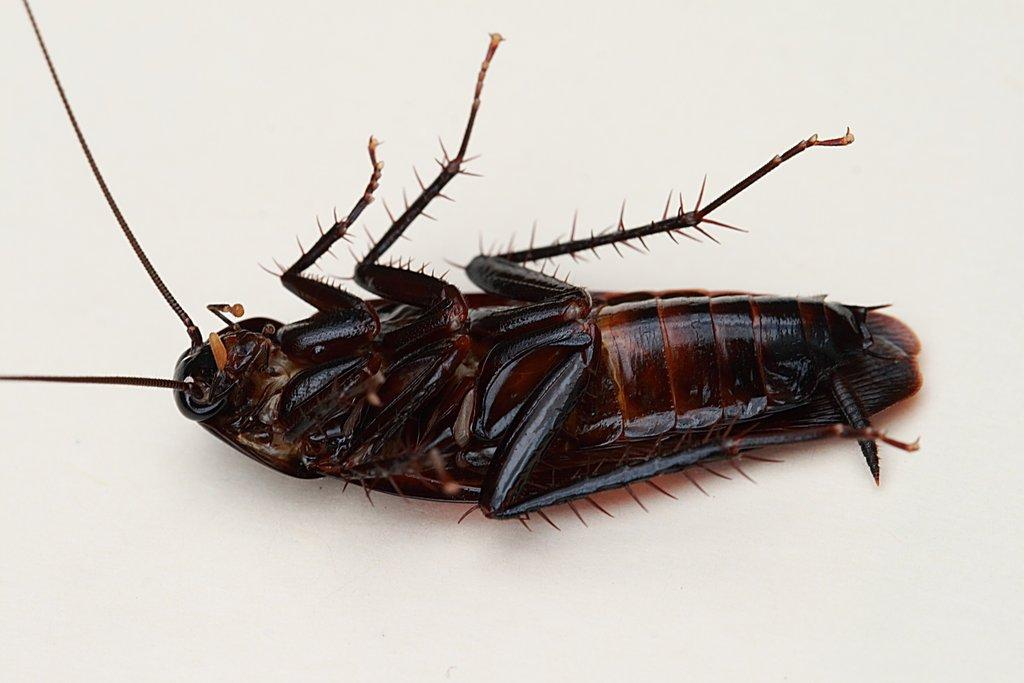
Scientific name: Periplaneta fuliginosa Family: Blattidae Order: Blattodea Risk level: High Category: Insect
? What is the smokybrown cockroach
Scientific name: Periplaneta fuliginosa
Family: Blattidae
Order: Blattodea
Risk level: High
Category: Insect
The smokybrown cockroach (Periplaneta fuliginosa) has a uniform dark reddish-brown color with no markings and measures 25–33 mm. It is a strong flier and is attracted to light. It prefers elevated places, such as tree cavities and building roofs, and enters buildings from above through roof openings and air ducts.
Life cycle of the smokybrown cockroach
Its life cycle is similar to that of the American cockroach: each ootheca contains 17–24 eggs, and the nymph passes through 10–12 instars over 6–24 months.
Distribution of the smokybrown cockroach
It is common in the southeastern United States, Japan and tropical regions. In the Gulf, it is found on upper floors of buildings and around air-conditioning units.
Health risks and related problems
It is a mechanical carrier of pathogens and can be a serious concern in airports, hotels and large residential complexes.
Signs of a smokybrown cockroach infestation
Signs include cockroaches flying toward lights in the evening, droppings near ventilation inlets and shed skins in roof cavities.
Where smokybrown cockroaches are found
They are found in nearby large tree cavities, ventilation and air-conditioning inlets, roof cavities and openings around outdoor lights.
Smokybrown cockroach control methods
Install protective screens over ventilation and roof openings. Prune nearby trees. Use outdoor lighting that is less attractive to insects, such as yellow LED lights.
Smokybrown cockroach control products
Use pyrethroids for residual treatment around roof and ventilation openings, and gel baits in roof cavities.
Requirements for controlling smokybrown cockroaches in food facilities
FSSC/BRCGS: include this pest in pest-control plans, with particular attention to upper entry points.
A fact about the smokybrown cockroach
The smokybrown cockroach is more sensitive to dehydration than other household cockroaches. It loses water through its body surface more quickly, which contributes to its association with more humid outdoor environments.
Frequently asked questions about the smokybrown cockroach
Q: Why does the smokybrown cockroach enter from above?
A: It prefers to live in trees and roof cavities. It flies toward building lights and can enter through any opening in the roof.
Q: How can I prevent it from entering through air-conditioning systems?
A: Install suitable protective screens over ventilation and cooling inlets. Inspect the screens regularly and make sure they remain intact