
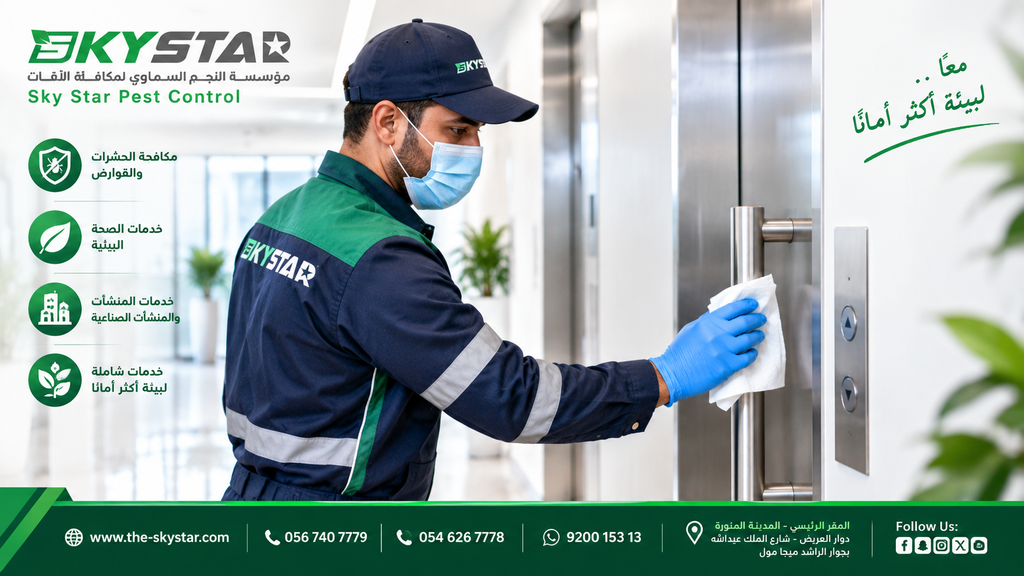
When Your Facility Needs an Infection Control Program
- Seasonal increases in sickness absence among employees or students.
- Recurring complaints about bathroom odors or cleanliness.
- Large numbers of daily visitors, as in clinics, complexes, and hotels.
- An existing cleaning contract without clear standards or reviewable records.
- Preparation for a quality audit or accreditation requiring documented procedures.
- The start of school or opening a new branch.
Why Facilities in the Hejaz Cities Need These Programs
- Hajj and Umrah seasons increase visitor numbers at clinics, hotels, and shopping complexes in Makkah and Madinah, along with respiratory infections.
- Long summers mean closed windows, continuous air conditioning, and recirculated air for months.
- Dust and storms carry dirt into air ducts and filters.
- Jeddah's humidity encourages mold in bathrooms and around air-conditioning units.
- Schools begin the academic year at the end of summer, bringing children together after a break.
What Happens Without a Program?
- Infections spread through hands and shared surfaces such as handles, lifts, and fingerprint readers. According to the World Health Organization, hand hygiene is one of the most important ways to reduce infection transmission.
- Absence and reduced productivity: A sick employee may infect colleagues sharing the office.
- Reputation: A bathroom with an unpleasant odor in a clinic or restaurant leaves a lasting negative impression.
- Inspection findings: Without records, compliance is difficult to demonstrate even when cleaning is good.
Program Components
High-Touch Surfaces
We identify surfaces touched by many people and prioritize them for more frequent treatment:
- Door handles, lift buttons, and railings.
- Fingerprint readers, reception screens, and payment terminals.
- Reception desks and waiting chairs.
- Meeting tables, shared kitchens, and water coolers.
- In schools: Desks, classroom handles, and playground equipment.
Hand Hygiene
No program is complete without clean hands. We help with:
- Choosing sanitizer dispenser locations at entrances, lifts, and reception areas.
- Handwashing instruction signs near sinks.
- A checklist for replenishing soap, sanitizer, and paper towels.
- A short awareness session for employees or students as part of Training.
Bathrooms
We provide regular deep disinfection of toilets, sinks, floors, handles, and walls up to hand height, address deposits and mold in joints, and disinfect floor drains. We give the daily cleaning team a schedule specifying work from cleaner to more contaminated areas.
Air Quality and Air-Duct Disinfection
- Visual inspection of vents, filters, and condensate drains.
- Disinfecting vents, filters, and condensate drains with products intended for air-conditioning systems.
- Recommendations for filter replacement schedules according to dusty seasons.
- Observations on ventilation in crowded rooms.
Mechanical cleaning of large central systems is coordinated with the facility's approved maintenance contractor. We handle disinfection and documentation.
Solutions by Sector
| Sector | Main Focus | Notes |
| Offices | Touchpoints, shared kitchens, and bathrooms | After-hours visits to avoid disrupting work |
| Clinics | Waiting areas, reception, and bathrooms | We coordinate with the clinic's infection control officer; medical waste and operating rooms are outside our scope |
| Schools | Classrooms, cafeterias, bathrooms, and playgrounds | Disinfection before the academic year and after holidays. See the Education Sector |
| Commercial and residential complexes | Lifts, entrances, prayer rooms, and public bathrooms | Schedules based on peak hours. See Multi-Site Facilities |
For healthcare facilities, see also the Healthcare Sector.
Our Process Step by Step
- Initial assessment: We visit and map areas by risk level and intensity of use.
- Program design: We specify products, frequency, and responsible staff, then send a written schedule.
- Baseline disinfection: An initial deep treatment covering all areas and air ducts.
- Scheduled visits: Following the timetable, with a checklist for every area.
- Reports: A report after every visit, plus monthly or quarterly summaries in the Client Portal.
- Review: We adjust the schedule according to season, inspection results, and your feedback.
Treatment by Area
| Area | Method | Product / Tool Type | When It Is Safe |
| Touchpoints | Wiping with disinfectant for the required contact time | Approved surface disinfectant and disposable wipes | After drying, 10–15 minutes |
| Bathrooms | Deep cleaning followed by disinfection | Deposit-removing cleaner and approved disinfectant | After drying, 30–60 minutes |
| Shared kitchens and cafeterias | Disinfecting surfaces and appliances | Disinfectant suitable for food-contact surfaces | After rinsing and drying, 30 minutes |
| Air ducts and filters | Disinfecting vents, filters, and drains | Disinfectant intended for air-conditioning systems | After operation and ventilation, 1 hour |
| Classrooms and waiting areas | Comprehensive spraying or wiping after hours | Approved disinfectant applied with a misting device | Before the next working day, after 2–3 hours |
Suggested Regular Schedules
| Area | Offices | Clinics | Schools | Complexes |
| Touchpoints | Daily by facility staff, plus a weekly visit | Several times daily | Daily | Several times daily |
| Bathrooms (deep treatment) | Weekly | Weekly or more often | Weekly | Weekly |
| Air ducts | Every 3 months | Monthly | Before each school term | Every 3 months |
The final schedule is set after assessment and according to operating hours.
Reports and Documentation
Every visit ends with a report covering treated areas, products, their categories and concentrations, the technician's name and visit time, observations, and actions required from the facility. Product labels are on Product Labels. These records support inspections and quality audits.
Prices
| Facility Size | Approximate Price Range |
| Disinfection visit for a small office | 230 –400 SAR |
| Clinic or school (one visit) | Based on area |
| Monthly program | Contract based on visit count and area |
| Multi-site facilities | A single consolidated quote |
For a quick estimate, use the Price Calculator or request a free inspection.
Before and After the Visit
Before the visit: Assign a facility coordinator and arrange access to bathrooms, equipment rooms, and air-conditioning vents. Clear papers and personal belongings from surfaces.
After the visit: Observe the return times in the table above and ventilate enclosed areas. General guidance is on the instructions before and after pest control page.
Guarantee
No program can prevent infection entirely, so we do not promise this. We guarantee the agreed schedule is carried out with approved products and will repeat any visit not completed according to the checklist at no charge within [Guarantee period]. See the Guarantee page.
Tips for Facility Management
- Assign one person to oversee the program and records.
- Place sanitizer dispensers where people actually pass, rather than in a remote corner.
- Ask sick employees to stay home instead of spreading infection.
- Increase disinfection frequency during Hajj and Umrah seasons and at the start of school.
- Do not mix cleaning products, and follow the container's contact time.
When is the cleaning team's work insufficient? When there are no written schedules or records, or complaints recur despite daily cleaning. A tailored program is then needed. For homes, see Home Disinfection.
Frequently Asked Questions
Q: How does an infection control program differ from a cleaning contract?
Cleaning removes dirt. The program identifies high-risk surfaces, uses disinfectants for the correct contact time, and documents the work in records.
Q: Do you work outside normal hours?
Yes. Most office and school visits are after hours or on weekends.
Q: Do you handle medical waste?
No. Specialist providers handle it. We cover surfaces, public areas, bathrooms, and air ducts.
Q: Do you train our staff?
Yes, through short sessions on hand hygiene, the disinfection sequence, and safe product use.
Q: Can the program be combined with pest control?
Yes, within one Pest Control Contract, with combined reports.
Q: How can I track visits?
Through the Client Portal, with the schedule, reports, and invoices in one place.
Areas We Serve
We serve Madinah from Al-Aridh (0546267778), Makkah from Al-Lith Road (0543545708), and Jeddah from Al-Mushrifah (0543627774), as well as Yanbu, Taif, and AlUla.