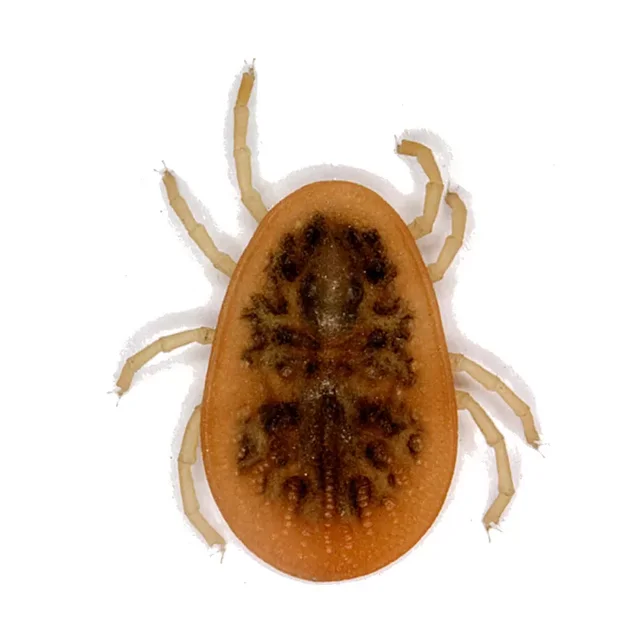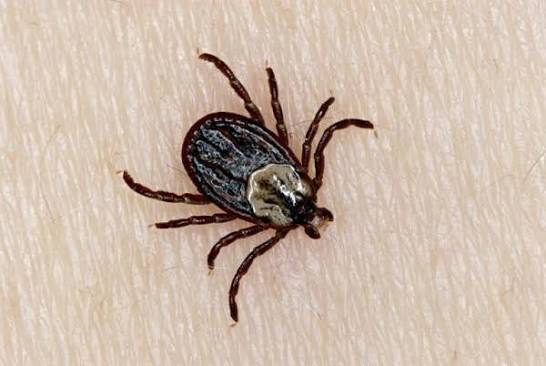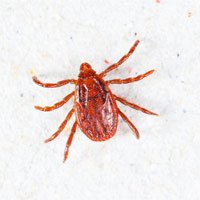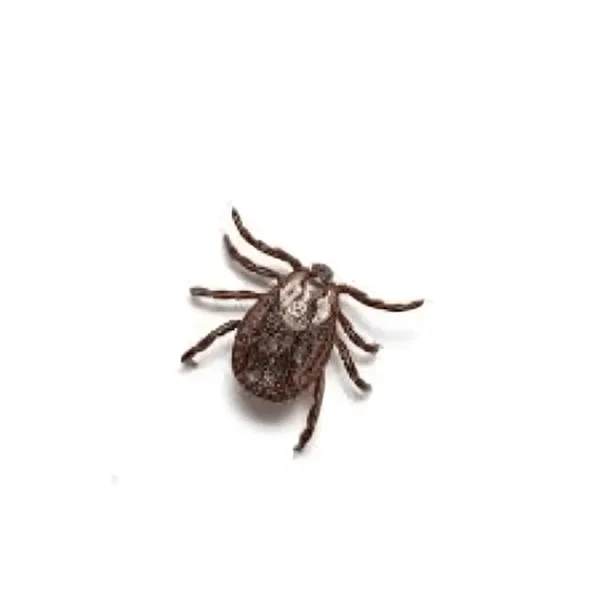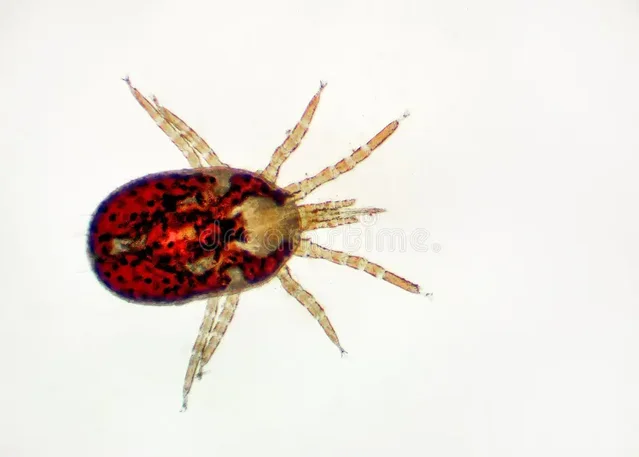
Scientific name: Dermanyssus gallinae Family: Dermanyssidae Order: Acari Risk level: High Category: Crawling pests
? What is the red poultry mite
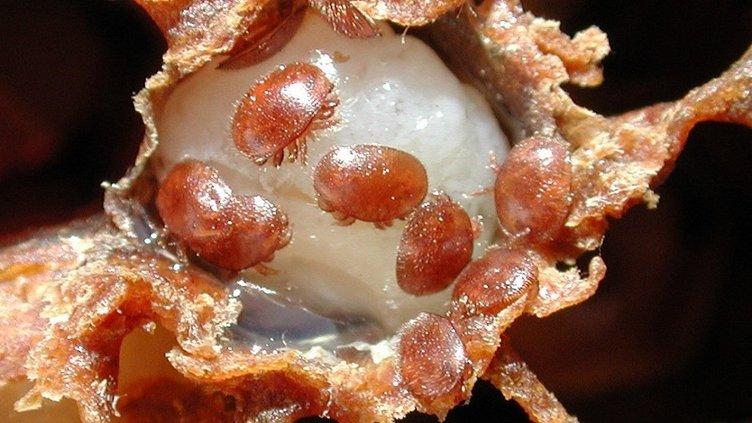
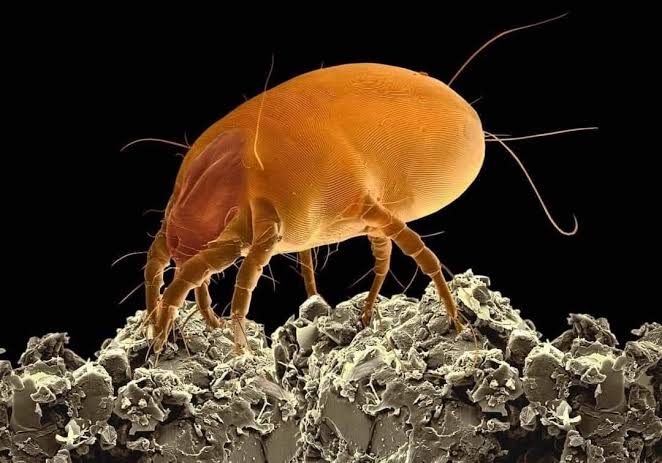
The red poultry mite (Dermanyssus gallinae) is a major pest of poultry farms worldwide. Its economic losses exceed one billion dollars annually in Europe alone. It feeds on birds’ blood at night and hides in cracks in the poultry house during the day. Adults are red after feeding and gray-white before feeding (0.6–1 mm).
Red poultry mite life cycle
Its rapid life cycle progresses from egg to six-legged larva to nymph to adult and is completed in two weeks under ideal conditions.
Where red poultry mites occur
They occur worldwide, with different species in different environments. They are common in Saudi Arabia, the Gulf and Egypt.
Damage and risks associated with red poultry mites
They cause anemia in birds, lower egg production, weakened immunity and death in severe infestations. Their bites can cause skin irritation, intense itching and allergic reactions in workers.
Signs of red poultry mites
Clinical symptoms are the main evidence (itching, rash and reactions). The mite cannot be seen with the naked eye, so specialist diagnosis is required.
Where red poultry mites are found
During the day, they hide in wood cracks and building cavities in poultry houses, and in egg boxes and densely occupied nesting areas. They can remain in an empty facility for months after birds are removed.
Red poultry mite control methods
Environmental control depends on the species: ventilation and humidity reduction for house dust mites, cleaning bird enclosures, and treating animals and their environment for mange.
Red poultry mite control products
Use specialized acaricides according to the species. Topical scabies treatments include permethrin. For poultry, fipronil and abamectin are listed.
Food-facility control requirements
FSSC/BRCGS: poultry mites pose a risk to farm workers and must be documented in the occupational risk assessment.
A fact about red poultry mites
D. gallinae has developed resistance to several pesticide classes on European poultry farms. This has driven the development of alternatives such as fluacrypyrim, essential oils and abamectin, making it an important example of pesticide resistance management in animal food production.
Frequently asked questions
Q: Can red poultry mites be seen with the naked eye?
A: Usually not. In most species, the mite is smaller than 0.5 mm. Diagnosis relies on signs and symptoms.
Q: What is the best treatment?
A: It depends on the species. Consult a doctor or specialist before any treatment