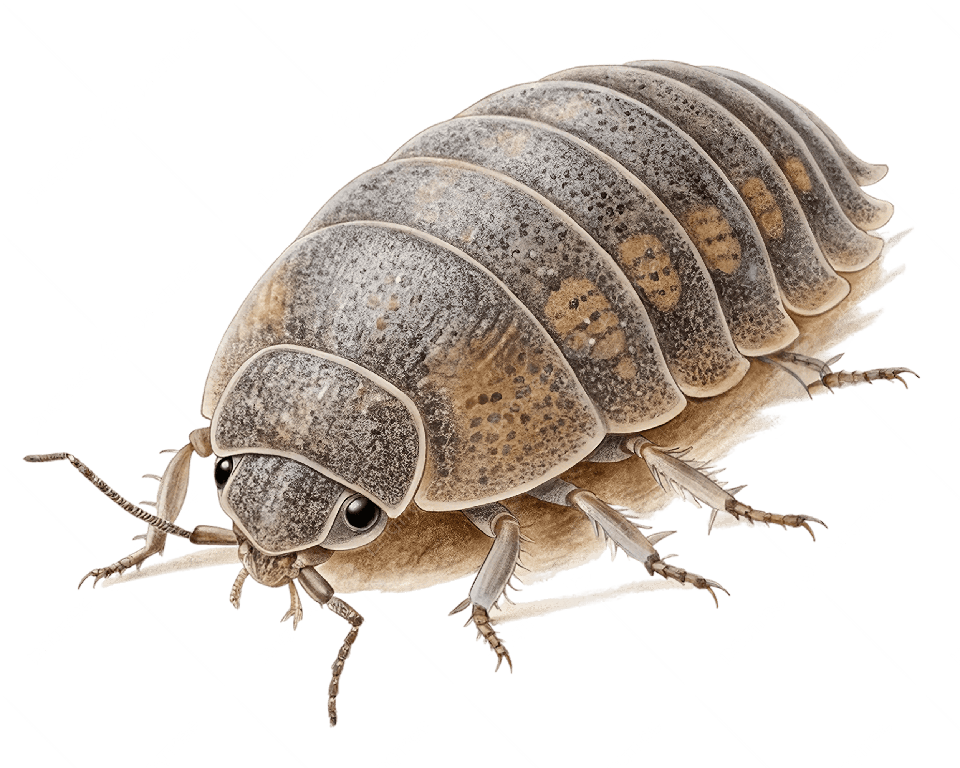
Scientific name: Porcellio scaber Family: Porcellionidae Order: Isopoda Risk level: Low Category: Crawling pests
? What is a rough woodlouse
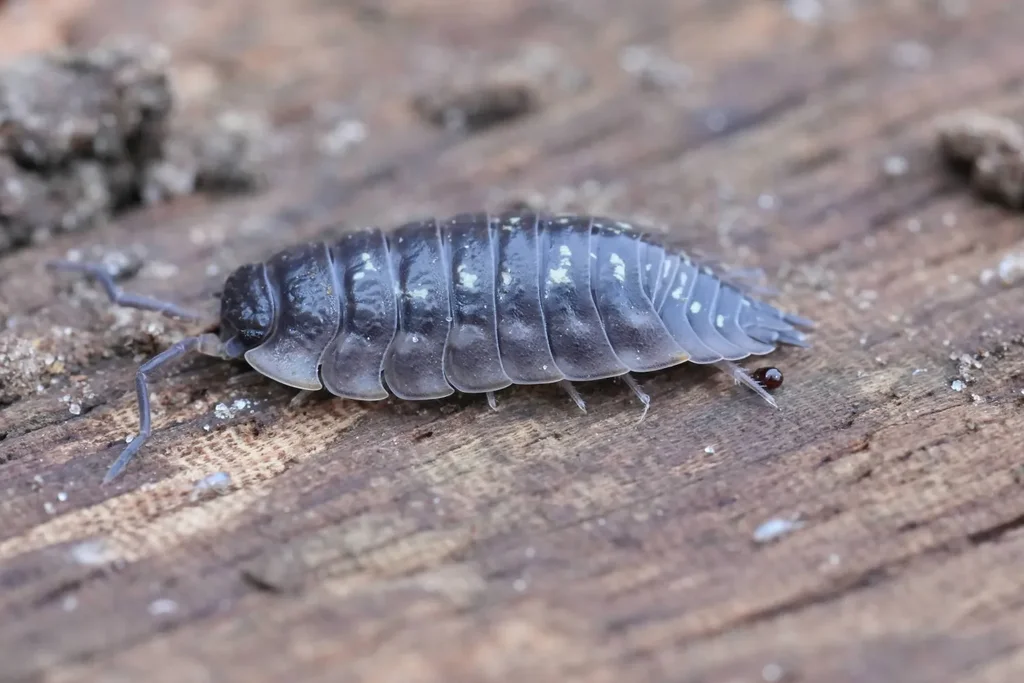
The rough woodlouse (Porcellio scaber) resembles the pill woodlouse but cannot roll itself up completely. It has a distinct rough, granular surface and is more common in urban and industrial environments. It requires relatively less humidity than its relatives.
Rough woodlouse life cycle
The life cycle varies: woodlice reproduce through eggs in a brood pouch, while mollusks lay eggs in damp soil.
Where rough woodlice occur
They occur worldwide in damp environments and are found in humid and agricultural areas of the Gulf, Saudi Arabia and Egypt.
Damage and risks associated with rough woodlice
They do not cause diseases. They damage roots and shoots in commercial nurseries and indicate humidity.
Signs of rough woodlice
Signs include the animals themselves in damp, dark places, plant damage and slimy secretions (from slugs).
Where rough woodlice are found
They occur under wooden pallets in warehouses, in damp brick walls, near water pipes and in basements.
Rough woodlouse control methods
Reducing humidity is the most important step. Remove firewood and accumulated organic matter. Use metaldehyde baits for slugs and diatomaceous earth for prevention.
Rough woodlouse control products
Use metaldehyde for snails and slugs, environmentally safe iron phosphate, and diatomaceous earth for isolation.
Food-facility control requirements
FSSC/BRCGS: woodlice and mollusks indicate unacceptable moisture conditions and must be included in pest-control plans.
A fact about rough woodlice
P. scaber is known to accumulate heavy metals in its body. It absorbs zinc, lead and copper from contaminated soil and stores them in special cells. This makes it a precise bioindicator of heavy-metal pollution in industrial areas.
Frequently asked questions
Q: Are rough woodlice dangerous?
A: Their risk level is low. Their presence in a facility indicates a moisture problem. Addressing the moisture source is more important than treating the woodlice directly.
Q: What does a moisture indicator mean?
A: The presence of these organisms indicates high humidity or a drainage problem in the facility. Addressing the moisture will reduce their presence automatically.