Signs of Bed Bugs
Bed bugs are active at night and hide during the day, so infestations are often discovered late. Watch for these signs:
- Clusters of bites: Often in a line or group on the arms, neck, or legs, noticed in the morning. Some people's skin does not react to bites, so their absence does not rule out an infestation.
- Small dark spots: Black or brown dots on mattress seams and sheet edges, caused by insect droppings.
- Small bloodstains: On pillows or sheets, caused by crushing a fed bug while sleeping.
- Shed skins: Translucent, honey-colored shells left by nymphs when they molt.
- Tiny white eggs: About the size of a pinhead, attached inside cracks and corners.
- Unusual odor: A heavy, sweet smell in large infestations.
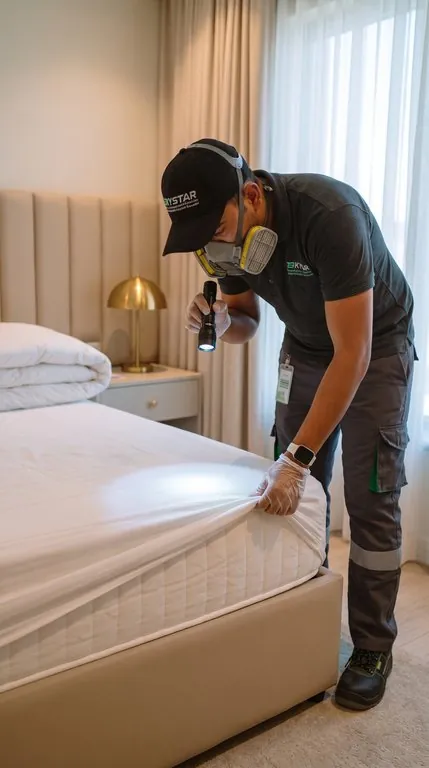
Inspect mattress seams, bed bases, wooden joints, and the inside of sofas.
Why Bed Bugs Spread in the Hejaz Cities
Bed bugs are associated with the movement of people and luggage rather than cleanliness. The Hejaz cities are among Saudi Arabia's busiest:
- Hajj and Umrah seasons bring millions of visitors to Makkah and Madinah. Hotels, furnished apartments, and shared accommodation fill up, making it easier for bugs to move between rooms and luggage.
- Jeddah is a transit city with its airport and seaport.
- Shared accommodation for workers and students is common, and closely spaced beds allow rapid spread.
- Continuous air conditioning during the long summer provides moderate temperatures suitable for reproduction.
How Bed Bugs Enter Your Home
Bed bugs do not fly or jump. They crawl and travel with belongings. Common entry routes include:
- Travel: They hide in luggage folds or clothing, then emerge in your home.
- Hotels and furnished apartments: One infested room can transfer bugs to dozens of guests.
- Used furniture: Secondhand beds, mattresses, and sofas are common sources. Inspect each item before bringing it indoors.
- Shared accommodation and apartment buildings: Bugs may travel through electrical openings and pipe gaps between neighboring apartments.
Harm and Health Risks
According to the US Centers for Disease Control and Prevention (CDC), bed bugs are not known to transmit diseases to humans. They can still cause harm:
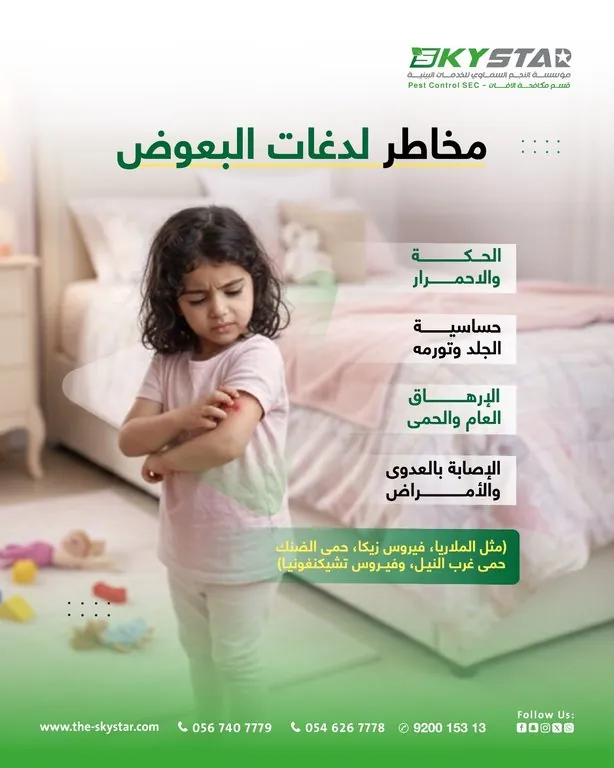
- Itching and irritation: Bites cause redness and itching, and persistent scratching may lead to secondary skin infections.
- Sleep disruption: Anxiety about bites can cause insomnia and daytime fatigue.
- Anxiety and stress: Persistent infestations put real strain on household members.
- Allergic reactions: Some people have stronger reactions and should consult a doctor.
Facilities face another impact: a single guest complaint may lead to rooms being closed. We therefore offer regular inspection programs for the Hotel Sector.
Why Bed Bug Control Requires at Least Two Visits
This is the most important point to understand before booking. The bed bug life cycle consists of eggs, five nymph stages, and adulthood. Eggs have a protective shell, and many pesticides do not kill them. They usually hatch within a few days to roughly two weeks, depending on temperature.
The plan therefore follows this sequence:
- The first visit kills adults and exposed nymphs and leaves a residual treatment in hiding places.
- The second visit, after 10–14 days, targets newly hatched nymphs before they mature and lay more eggs.
- A third visit may be needed for severe infestations or shared accommodation.
A promise to eliminate bed bugs with a single spray treatment ignores their life cycle.
Heat Treatment Compared with Chemical Treatment
| Criterion | Heat Treatment | Chemical Treatment |
| How it works | Heating the premises or item to a temperature that kills bugs and eggs | Registered residual insecticides applied in hiding places |
| Effect on eggs | Effective on eggs when the required temperature is reached | Limited; a second visit is therefore needed |
| Residual effect | None; bugs arriving later are unaffected | Lasts for a period and affects newly hatched nymphs |
| Suitable for | Mattresses, sofas, luggage, and delicate items | Cracks, floors, bed bases, and frames |
| Time away from premises | Depends on the application method | 3–4 hours for adults; 6 hours for vulnerable groups |
The best results come from combining both methods: heat for mattresses and fabrics, and residual insecticide for cracks. During the inspection, we determine the best method for each item.
What to Do with Mattresses and Clothing
Do not throw out the mattress immediately. Most can be treated and saved. Discarding one without wrapping it may spread bugs through stairs and hallways.
- Clothing and bedding: Wash at the highest temperature the fabric can tolerate, then tumble-dry on high heat for at least 30 minutes. Store in sealed bags until treatment is complete.
- Non-washable items: Shoes, bags, and soft toys can be placed in a hot dryer or sealed bags.
- Mattresses: After treatment, we recommend a zippered bed bug mattress encasement to trap remaining bugs and make later inspection easier.
- Damaged furniture: If you discard it, wrap it in plastic and mark it as infested.
Our Process Step by Step
- Inspection: The technician checks bedrooms, living areas, and furniture, identifying the source and extent of the infestation and whether it has reached adjoining rooms.
- Planning: We specify the visits and areas for heat or chemical treatment and send a clear preparation checklist.
- Treatment: We treat cracks, bed bases, carpet edges, and doorframes with pesticides registered and approved for public health use, and use the most suitable method for mattresses.
- Follow-up: We return after 10–14 days for the second visit and check for new activity.
- Report: You receive a written record of treated areas, products, and recommendations. Facility reports appear in the Client Portal.
Treatment by Area
| Area | Treatment Method | Product Type | When the Area Is Safe |
| Mattress | Steam or heat, with targeted treatment of seams | Heat treatment or insecticide intended for fabrics | After fully drying, 4–6 hours |
| Bed base and frame | Targeted spraying in joints and cracks | Residual insecticide | After 3–4 hours; 6 hours for vulnerable groups |
| Sofas and living areas | Steam followed by treatment of the lower frame | Heat treatment and residual insecticide | After 4–6 hours |
| Carpet edges and floors | Spraying along edges and in corners | Residual insecticide | After 3–4 hours |
| Electrical openings and cracks | Insecticidal dust in voids | Insecticidal powder intended for voids | After 3–4 hours |
| Cabinets and drawers | Emptying, then targeted spraying of frames | Residual insecticide | After 3–4 hours, with ventilation |
Bed Bug Control Prices
The price depends on bedroom count, infestation severity, and number of visits. These ranges are approximate:
| Property Type | Approximate Price Range |
| One room | 230 –300 SAR |
| Apartment with 2–3 bedrooms | 400–700 SAR |
| Villa or an entire floor | 800–1500 SAR |
| Hotel rooms or shared accommodation | Contract based on room count |
Prices include two visits unless the quote states otherwise. For a more precise estimate, try the Price Calculator or request a free inspection.
Before and After the Service
Before the service: Wash bedding and clothing near the bed and place them in sealed bags. Empty drawers beneath beds. Move furniture slightly away from walls. Do not move belongings to unaffected rooms.
After the service: Stay away for 3–4 hours for adults and 6 hours for infants, pregnant women, older adults, people with respiratory conditions, and pets. Do not wipe treated areas for 24 hours. Sleep in your usual room, as your presence draws remaining bugs toward treated areas.
Full details are on our instructions before and after pest control page.
Guarantee
Bed bug control includes a 30-day guarantee beginning after the last visit. If activity returns in treated areas during that period, we return and treat at no charge. You must follow preparation instructions and avoid introducing new used furniture during the period. See the Guarantee page.
Realistic Home Prevention Tips
- Check your hotel room on arrival: lift the sheet edge and inspect mattress seams and the headboard. Put luggage on the rack rather than the bed.
- After traveling, open your luggage in the bathroom or on the balcony and wash clothing immediately in hot water.
- Do not buy used furniture without checking seams and joints with a flashlight.
- Use zippered mattress encasements to help with early detection.
- Reduce clutter beneath the bed.
When are these tips insufficient? Live bugs, eggs, or recurring bites mean household products will not reach eggs in cracks and may drive bugs into other rooms. Professional bed bug control is needed. Learn more in our Pest Library: Bed Bugs.
Frequently Asked Questions
Q: Do bed bugs indicate poor cleanliness?
No. Bed bugs feed on blood, not food debris, and can enter even the cleanest homes and hotels through luggage and furniture. Cleanliness and reduced clutter simply make detection and treatment easier.
Q: Can they be eliminated in one visit?
Rarely. Most pesticides do not affect eggs, which hatch after the first visit. The plan therefore includes at least two visits, 10–14 days apart.
Q: Must I throw away my mattress?
Usually not. Mattresses can be treated with heat, steam, or targeted application, then covered with an encasement. We recommend disposal only when severe tears make treatment difficult.
Q: Should I sleep in another room after treatment?
Return to your room after the required waiting period. Moving to another room may carry bugs with you.
Q: When will the bites stop completely?
You may notice a few bites in the first days from newly hatched nymphs. If they continue after the second visit, report this under the guarantee.
Q: Do you treat hotels and shared accommodation?
Yes. We provide inspection and treatment programs for hotels, furnished apartments, and worker accommodation, with a report for each room, especially before Hajj and Umrah seasons.
Areas We Serve
Our teams serve Madinah from Al-Aridh (0546267778), Makkah from Al-Lith Road (0543545708), and Jeddah from Al-Mushrifah (0543627774), as well as Yanbu, Taif, and AlUla.