Signs of Rodents
Rodents are cautious and active at night, so their traces usually appear first. Watch for:
- Small dark droppings, rice-grain shaped or larger, beside walls and in cabinets and storage areas.
- Gnaw marks on bags, cardboard, wooden doors, and plastic-coated wiring.
- Scratching and movement inside suspended ceilings and walls at night.
- Dark greasy marks on walls and opening edges, left by fur rubbing repeatedly along the same route.
- Nests made of shredded paper, fabric, and insulation in hidden areas.
- A strong urine odor in storage rooms and enclosed spaces.
- Agitated pets barking or staring at the same corner.
Why Rodents Are Common in the Hejaz Cities
Rodents seek food, water, and shelter. Several local conditions bring them closer to homes and facilities:
- Jeddah's drainage networks and channels, particularly after winter rains flood burrows and drive rats above ground and into buildings.
- The concentration of restaurants and markets in Makkah and Madinah, with large amounts of food waste during Hajj and Umrah seasons.
- Warehouses and industrial areas storing grains and food for long periods.
- Farms and palms in Madinah, AlUla, and Yanbu, providing fruit and shelter.
- Construction and demolition sites: Demolishing older buildings disperses rodents into neighboring properties.
Damage and Risks
Rodents pose serious risks to both health and property. According to the World Health Organization and CDC, they are associated with several diseases, including:
- Leptospirosis: A bacterial infection spread through water or soil contaminated with rodent urine, which can enter through wounds or mucous membranes.
- Salmonellosis: Through contamination of food and surfaces with droppings.
- Stock contamination: Rodents spoil far more food through contamination than they eat.
- Wiring damage and fire risk: Rodents constantly gnaw to wear down their teeth. Damage to wire insulation can cause short circuits and fires.
- Damage to insulation and pipes in ceilings and walls.
If you or an employee develops symptoms after possible exposure, consult a doctor.
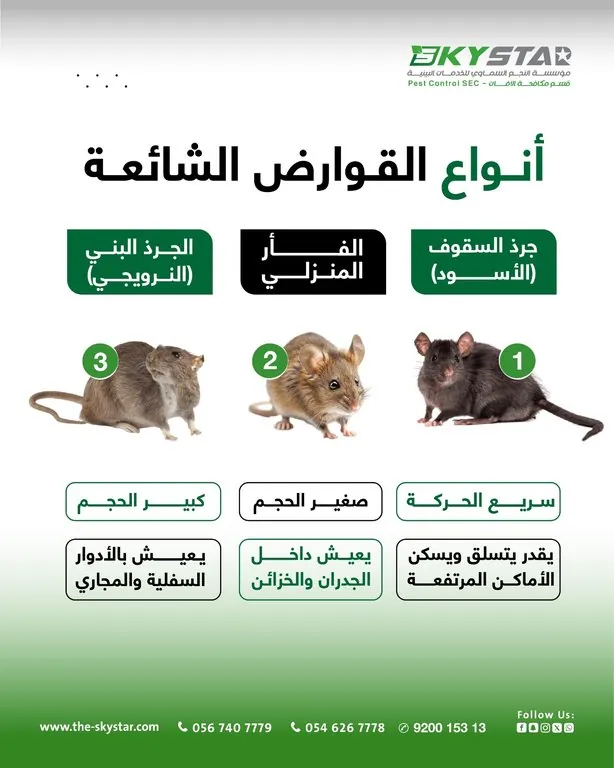
Mouse or Rat?
Identifying the rodent determines trap size, station placement, and how entry points are sealed:
| Criterion | House Mouse | Rat |
| Size | Small; body approximately 7–10 cm | Large; body may exceed 20 cm |
| Tail | Long and thin relative to the body | Thick; shorter than the body in Norway rats |
| Droppings | Small and pointed, like a grain of rice | Large and elongated, like a small date |
| Entry opening | Approximately pencil-sized | Approximately the size of a large coin |
| Behavior | Curious and approaches new objects | Very cautious around new objects |
| Usual location | Inside cabinets, ceilings, and furniture | Drains, ground-level storerooms, roofs, and trees |
Entry Points and How We Seal Them
Rodent treatment without sealing entry points allows the problem to return. We offer sealing as a separate service or as part of a rodent control plan. Common openings include:
- Gaps around water and drain pipes and air-conditioning units.
- Gaps beneath exterior and warehouse doors.
- Unprotected vents and extractor fans.
- Cracks in walls and foundations.
- Broken or poorly fitted drain covers.
We seal openings with materials rodents cannot gnaw through, such as metal mesh and steel wool combined with sealants, and fit rubber and metal door barriers. Insulating foam alone is insufficient because rodents chew through it easily.
Numbered Bait Stations and Facility Maps
In restaurants, warehouses, and factories, we use a documented system rather than simply placing baits:
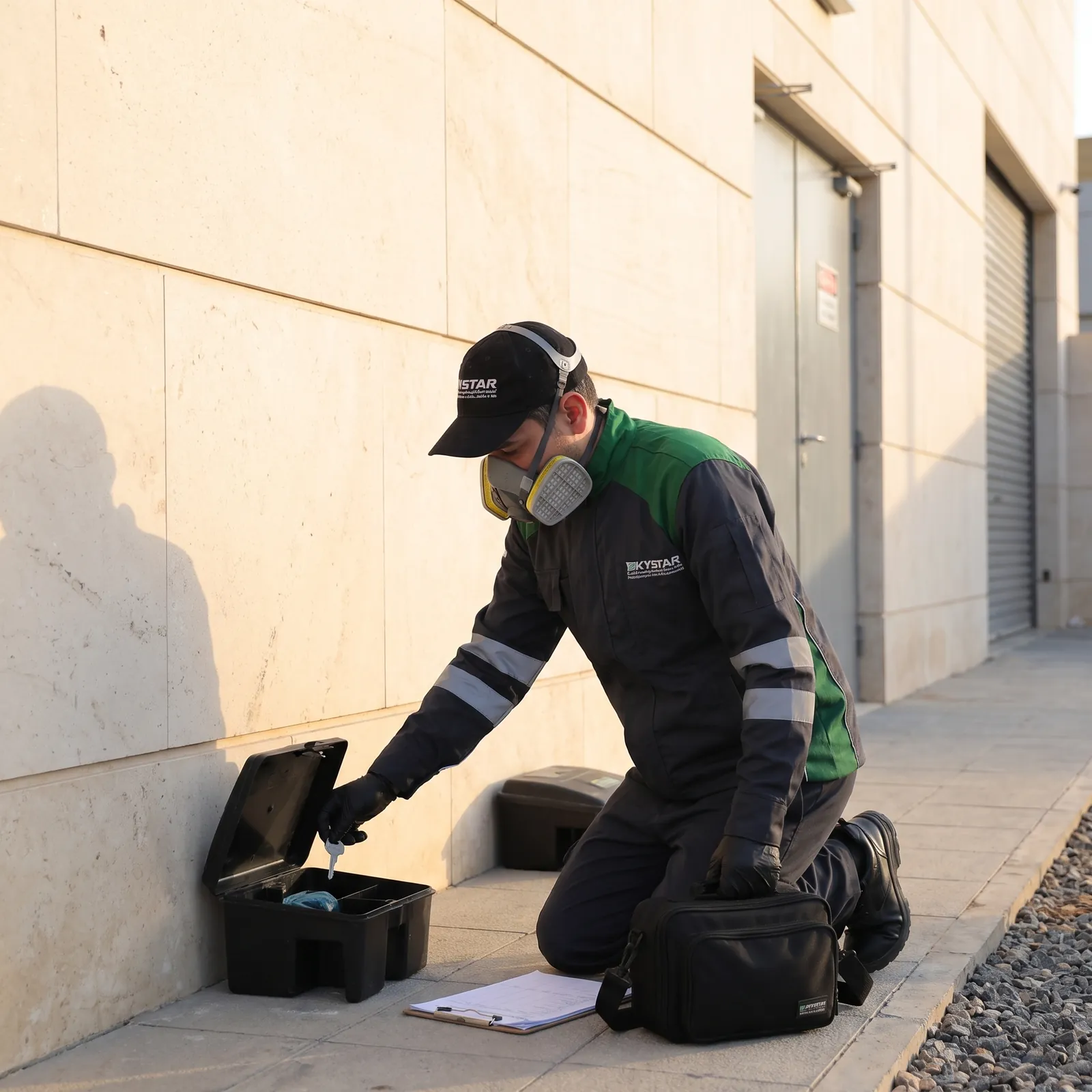
- Closed, locked stations inaccessible to children and pets, placed around the external perimeter and near entrances.
- A fixed label giving each station its number.
- A facility map showing the numbered location of every station and trap.
- An inspection record at every visit: Was bait consumed? Was a rodent found? What action was taken?
- Activity analysis: Repeated bait consumption at particular stations helps us identify and address entry routes.
These maps and records are available in the Client Portal, supporting inspections and food safety audits.
Why We Do Not Place Poison in Open Kitchens
Poison baits inside kitchens or food preparation areas pose real risks. A rodent may drag bait near food or die inside a wall or ceiling, causing odors and attracting other insects. We therefore follow these principles:
- Mechanical traps: Strong traps that kill rodents immediately, placed along their routes beside walls.
- Glue traps: Useful for monitoring and sensitive areas, with regular checks.
- Poison bait stays outside the kitchen in locked stations around the external perimeter or in areas away from food contact.
Rodents in Warehouses and Restaurants
Warehouses: Stock placed on the floor and pallets against walls create ideal hiding places. We recommend inspection aisles between goods and walls, place stations along internal and external perimeters, and seal loading doors.
Restaurants: We focus on goods receiving areas, storerooms, rear waste bins, and drains, linking the plan to a Food Safety Program. See our Restaurant Sector page.
Our Process Step by Step
- Inspection: Identifying the rodent, its routes, entry points, and food and water sources.
- Planning: Specifying trap and station numbers and locations, openings to seal, and visits.
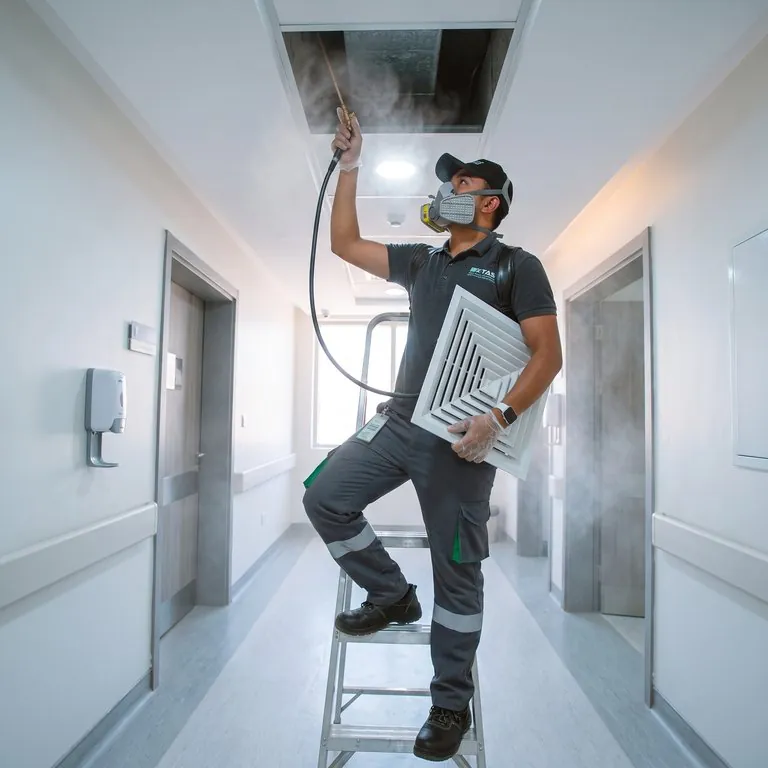
- Treatment: Installing traps and numbered stations, sealing entry points, and removing nests.
- Follow-up: Checks after 3–7 days to remove trapped rodents, followed by scheduled facility visits.
- Report: Recorded activity, actions taken, and a station map.
Treatment by Area
| Area | Treatment Method | Product Type | When the Area Is Safe |
| Kitchens and food preparation areas | Mechanical and glue traps only | No toxic products | Immediately |
| Internal storerooms | Traps and locked stations away from food | Rodent food baits inside stations | Immediately, with children and animals kept away from stations |
| External perimeter | Numbered, locked bait stations | Rodent food baits | Immediately; stations are closed |
| Suspended ceilings | Traps along rodent routes | Usually no toxic products | Immediately |
| Drainage and inspection chambers | Moisture-resistant stations | Baits intended for damp areas | Immediately, with the cover closed |
| Warehouses | Stations along internal and external perimeters, with entry-point sealing | Rodent food baits | Immediately |
Rodent Control Prices
| Property Type | Approximate Price Range |
| Apartment | 230 –300 SAR |
| Villa | 350–700 SAR |
| Entry-point sealing | Based on the number and type of openings |
| Restaurant | Monthly contract based on area |
| Warehouse or factory | Contract based on station count |
Use the Price Calculator for an initial estimate.
Before and After the Service
Before the service: Store food in airtight containers, remove waste, and tell us where you have heard sounds or found droppings. Do not place poison yourself before the visit.
After the service: Do not move traps or stations or touch them by hand. If you find a dead rodent, wear gloves and place it in two sealed bags, or contact us. If supplementary insect spraying is used, stay away for 3–4 hours for adults and 6 hours for vulnerable groups, and do not wipe treated areas for 24 hours.
See the Instructions page.
Guarantee
Rodent control includes a 30-day guarantee. If activity returns in the treated area during that period, we return and treat at no charge, provided entry-point sealing and food storage recommendations have been followed. See the Guarantee page.
Realistic Home Prevention Tips
- Seal gaps beneath doors with metal brushes and gaps around pipes with metal mesh.
- Do not leave pet food exposed overnight.
- Use tightly lidded waste bins and empty them daily.
- Trim trees near roofs and windows, as rats climb them.
- Avoid piling cardboard and belongings in storerooms or on roofs.
When are these tips insufficient? Fresh droppings or movement every night indicate rodents are already inside, and sealing alone may trap them there. Indiscriminate household poisons can leave a dead rodent in a wall. Professional rodent control is needed.
Frequently Asked Questions
Q: Does seeing one mouse mean there is an infestation?
Usually, yes. Mice reproduce quickly and are rarely alone. Check droppings and gnaw marks to assess the extent.
Q: Why does a rat avoid the trap?
Rats are cautious around new objects. We sometimes leave traps unset for a few days until they become familiar, then activate them.
Q: Are baits safe around children and cats?
We put bait in locked stations that open only with a key and do not use poison baits in kitchens. Tell us about pets so we can account for them.
Q: What about a dead rodent's odor inside a wall?
This is one reason we prefer traps inside homes. If it occurs, we help locate the source where possible. The odor usually lessens within days.
Q: Do ultrasonic devices repel mice?
Their effectiveness is limited and inconsistent, and rodents become accustomed to them. We do not rely on them as a solution.
Q: How long does rodent removal take?
A minor household infestation may be resolved in 1–2 weeks. Warehouses and restaurants need an ongoing scheduled program.
Areas We Serve
We provide mouse and rat control in Madinah through Al-Aridh (0546267778), Makkah through Al-Lith Road (0543545708), and Jeddah through Al-Mushrifah (0543627774), as well as Yanbu, Taif, and AlUla.