Signs of Termites
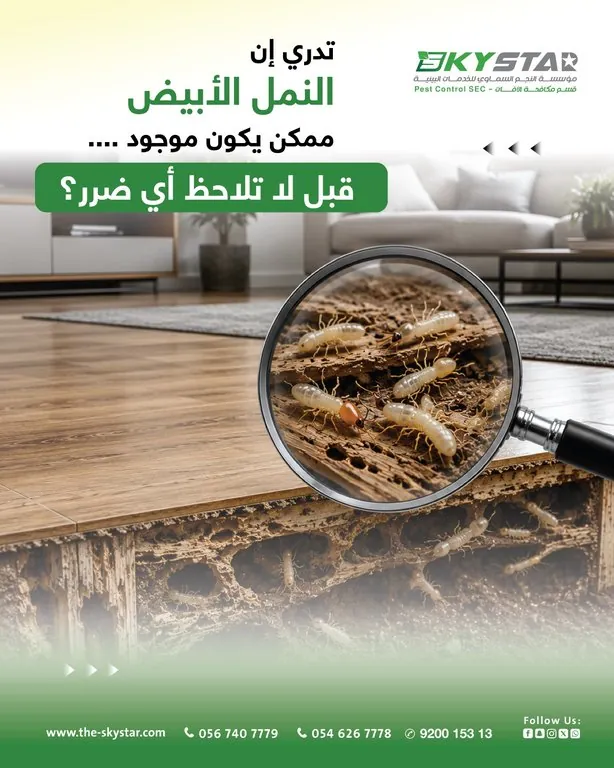
Termites work silently from within, so visible damage may take a long time to appear. Look for:
- Thin mud tubes, roughly a pencil's width, along walls, foundations, or behind cabinets. Termites build them to travel away from light and dry air.
- Hollow wood: A doorframe or cabinet base sounds hollow when tapped, or a screwdriver sinks into it easily.
- Discarded wings: Small piles of transparent wings near windows and doors, particularly after rain or on warm evenings, indicating reproductive swarms.
- Blistered paint or wallpaper resembling moisture damage.
- Wooden doors and windows that suddenly become difficult to close.
- Fine dust or debris emerging from small holes in wood.
Why Termites Are Common in the Hejaz Cities
Subterranean termites live in soil and need moisture and a source of cellulose. Several conditions in the Hejaz favor them:
- Jeddah's coastal humidity and high groundwater in some neighborhoods, together with winter rains that increase soil moisture around foundations.
- Persistent leaks from underground water tanks, drains, and air-conditioning units, common in older Makkah and Madinah buildings.
- Farms and gardens in Madinah, especially palm farms with trunks and plant debris.
- Ongoing construction: Rapid urban growth sometimes means building on untreated soil and leaving wood debris beneath tiles or in backfill.
- Warm temperatures for most of the year keep colonies active without a long winter pause.
Damage and Risks
Termites are not known to transmit diseases to humans. Their main risk is property and structural damage:
- Wood damage: Doors, frames, suspended ceilings, built-in cabinets, and wooden floors.
- Damage to paper and documents in warehouses, archives, and libraries.
- Hidden damage: Wood can be hollowed out while its surface appears intact, so damage is only discovered when it collapses.
- Repair costs: Repairs after an infestation becomes established usually cost far more than preventive treatment.
- Property value: An informed buyer requests an inspection before purchase, and an untreated infestation weakens the seller's position.
Termites Compared with Ants
People often confuse them, particularly winged swarms. These differences help:
| Criterion | Termites | Ants |
| Waist | Broad and straight, with no narrow waist | Very narrow between thorax and abdomen |
| Antennae | Straight and bead-like | Bent at an angle |
| Wings in swarms | Four wings of roughly equal length, shed easily | Front wings longer than hind wings |
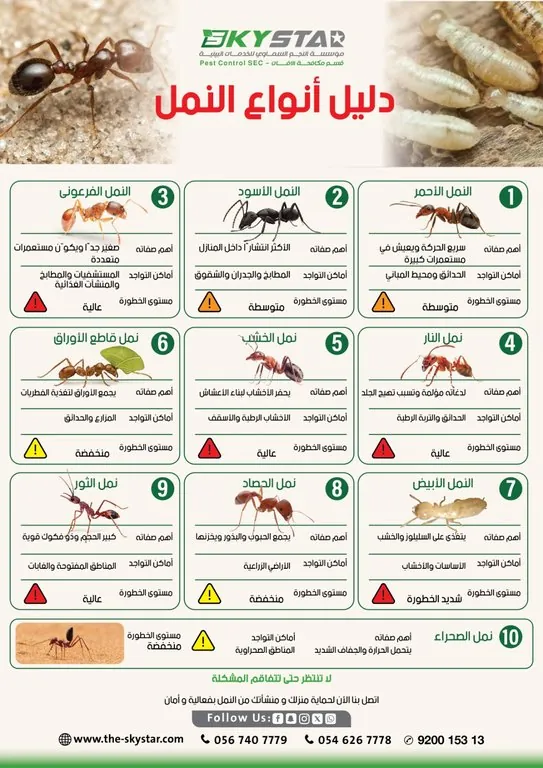
| Color | Workers are pale white or cream | Usually black, brown, or red |
| Food | Cellulose: wood, paper, and cardboard | Food scraps, sugars, and insects |
| Activity location | Inside soil, wood, and mud tubes | Exposed on ground and surfaces |
If you are seeing ants, our Crawling Insect Control service may help. Learn more about termites in our Pest Library: Termites.
Pre-Construction Treatment for Contractors and Owners
The least costly time to protect a building is before concrete is poured. Pre-construction treatment creates a chemical barrier in the soil to prevent termites from reaching the building from below.
- After excavation and leveling: We treat the excavation base and sides of footings.
- After backfilling and compaction: We treat soil beneath the ground-floor slab before plastic sheeting and concrete pouring.
- Around pipe routes: We treat pipe and utility penetrations, which are known weak points.
- External perimeter: On request, we treat soil around exterior walls after construction is complete.
After treatment, we give the contractor or owner a [Treatment certificate name] recording the date, stages, treated area, and product category. It helps with project handover and future owners. We coordinate with the concrete pouring schedule to avoid delays.
Treating Existing Buildings
In an existing building, soil beneath it cannot be reached directly, so we use other methods:
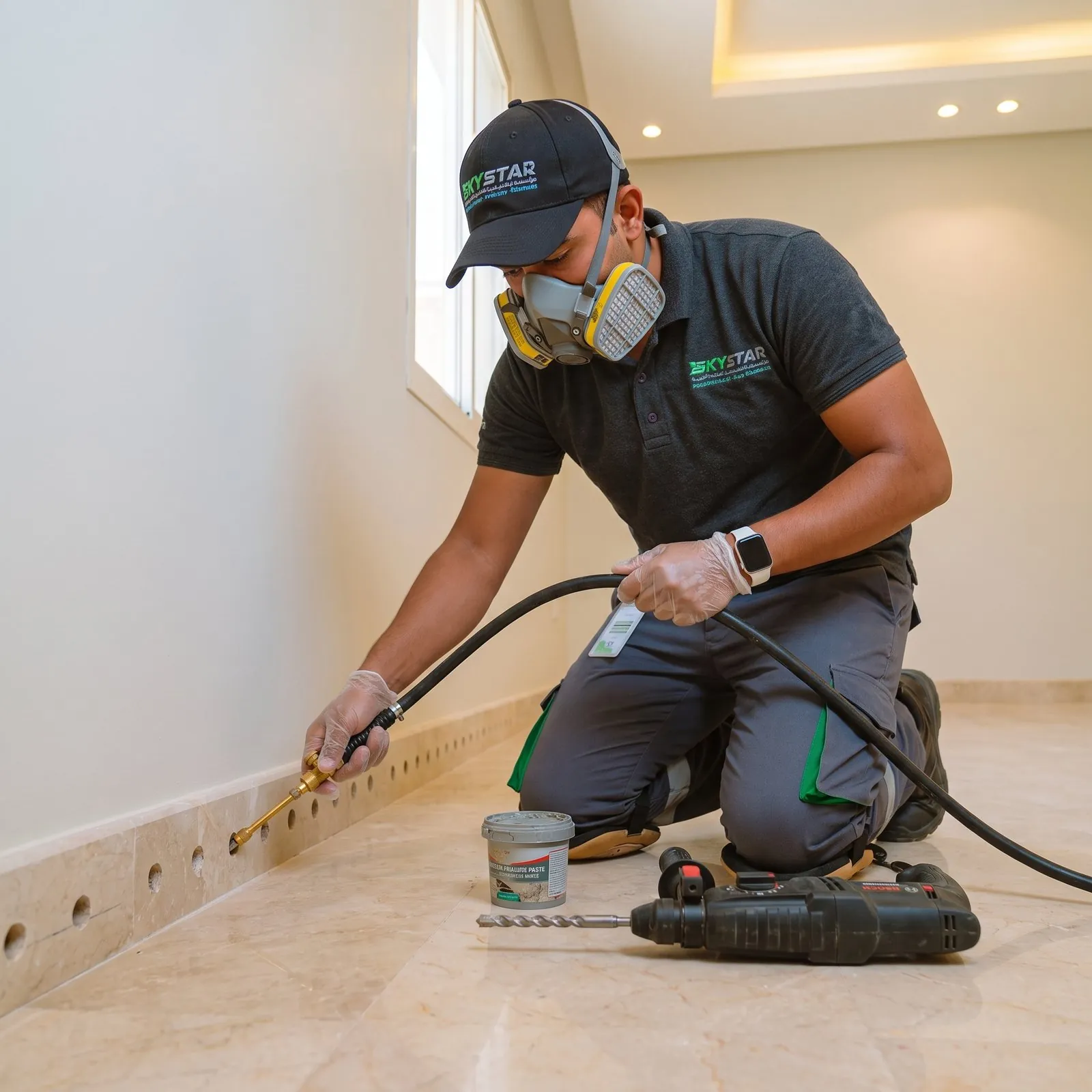
- Injection: We drill small holes at regular intervals through tiles or along wall bases and inject a termite pesticide into the soil below to form a barrier. We then seal the holes.
- Infested wood treatment: Targeted injection into affected frames and timber.
- Bait stations: Stations are buried around the building or placed over active tubes. Termites eat the bait and carry it back to the colony, gradually weakening it. Baits work more slowly than injection but target the colony itself and need regular monitoring.
- Removing moisture sources: We identify leaks and wood touching soil and recommend repairs, as treatment alone is insufficient where moisture persists.
How Long Treatment Remains Effective
Protection varies by product, application method, soil type, and water exposure. As a general guide:
- Pre-construction soil treatment: Approximately 5 years of protection, depending on the product and conditions.
- Injection in existing buildings: 3–5 years, with periodic inspections required.
- Bait stations: Effective while monitoring and bait replacement continue every 1–3 months.
Major leaks or later excavation around the building can break the chemical barrier. We therefore recommend annual inspection.
Our Process Step by Step
- Inspection: Checking wood, walls, foundations, and moisture sources to identify the infestation's type and extent.
- Planning: Selecting injection, baiting, soil treatment, or a combination, and specifying the visits.
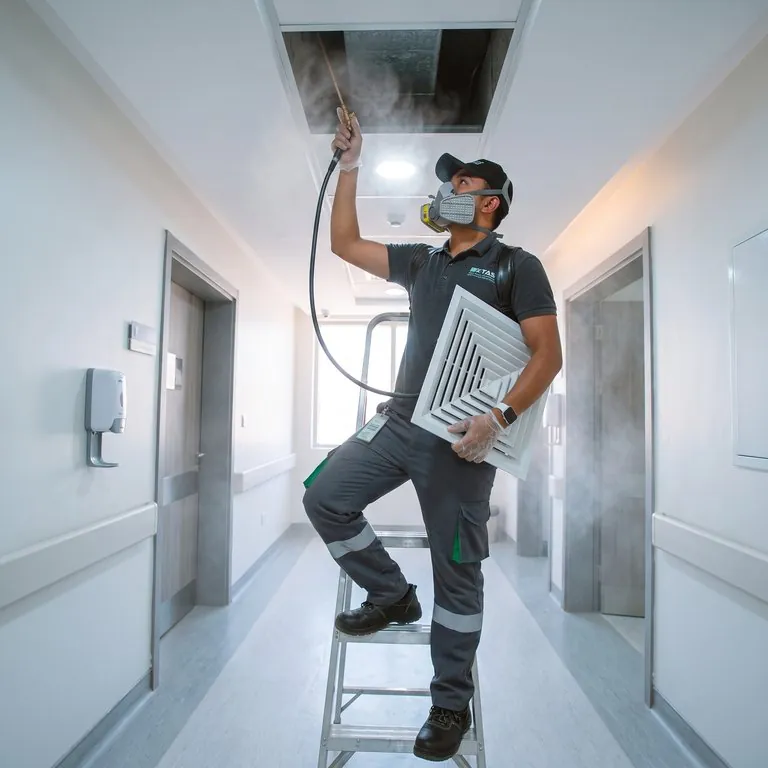
- Treatment: Injection or treatment with pesticides registered and approved for public health use, while protecting floors and furniture.
- Follow-up: Inspection visits after 1–3 months and regular bait monitoring.
- Report: A written record of treated sites, products, and recommendations for the building.
If you are buying or selling property, request a Termite Inspection Report before signing the contract.
Treatment by Area
| Area | Treatment Method | Product Type | When the Area Is Safe |
| Foundation soil before concrete pouring | Soil spraying in stages | Long-lasting residual soil pesticide | Work resumes after the surface dries |
| Floors in an existing building | Injection through holes in tiles | Soil pesticide intended for termites | After 3–4 hours; 6 hours for vulnerable groups |
| Wooden doors and frames | Targeted injection into wood | Pesticide intended for wood | After 3–4 hours, with ventilation |
| Building's external perimeter | Soil injection or bait stations | Soil pesticide or growth-inhibiting baits | Immediately for baits; 3–4 hours for injection |
| Adjacent gardens and trees | Soil treatment around roots | Residual soil pesticide | After 3–4 hours, keeping animals away |
| Warehouses and archives | Injection and bait stations | Soil pesticide and baits | After 3–4 hours |
Termite Control Prices
| Service Type | Approximate Price Range |
| Targeted treatment of a frame or cabinet | 230 –400 SAR |
| Injection for an apartment or ground floor | 800–2000 SAR |
| Injection for an entire villa | 2000–5000 SAR |
| Pre-construction treatment | Priced per square meter |
| Bait station system with follow-up | Annual contract |
The exact price is set after inspection. Use the Price Calculator for an initial estimate.
Before and After the Service
Before the service: Empty affected built-in cabinets and move furniture away from the relevant walls. If you have plans, tell us where utilities run beneath the tiles.
After the service: Stay away for 3–4 hours for adults and 6 hours for infants, pregnant women, older adults, people with respiratory conditions, and pets. Do not wipe treated areas for 24 hours or move or open bait stations.
Full guidance is on the Instructions page.
Guarantee
Termite control includes a minimum 30-day guarantee: if activity returns in treated areas, we return and treat at no charge. For pre-construction treatment and full injection, the guarantee may extend to [Approved period] under the contract. Recommended leak repairs must be completed. See the Guarantee page.
Realistic Home Prevention Tips
- Repair leaks immediately, especially around underground tanks, air-conditioning units, and bathrooms.
- Keep wood away from soil. Do not store timber or cardboard against exterior walls.
- Direct irrigation water away from foundations and avoid dense planting against walls.
- Do not leave wood debris beneath backfill or tiles during renovation.
- Inspect the home yourself once a year: tap frames and look for mud tubes.
When are these tips insufficient? Mud tubes or hollow wood often indicate a colony in soil beneath the building, beyond the reach of household pesticides. Spraying tubes only kills the termites inside and drives the colony to another route. Specialist termite control is needed.
Frequently Asked Questions
Q: Am I seeing termites or winged ants?
Check the waist and wings. Termites have broad waists and four wings of roughly equal length. If unsure, keep a sample in a bag and send us a photo.
Q: Is pre-construction treatment mandatory?
Many projects require it in their specifications, and it costs much less than later treatment. We recommend it for every new building.
Q: Does injection damage tiles?
We drill small holes at regular intervals, then seal them with a suitable material. Minor marks may remain, and we choose drilling locations carefully where possible.
Q: How long do baits take to eliminate a colony?
From weeks to months, depending on colony size and season. Baits work slowly but target the colony and need regular follow-up.
Q: Can termites return after treatment?
They may return if moisture sources remain or later excavation breaks the barrier. We recommend repairing leaks and inspecting annually.
Q: I want to buy a home. Can you inspect it?
Yes. We provide a Termite Inspection Report. You can also request a Move-In Inspection for other pests.
Areas We Serve
We provide termite control before and after construction in Madinah through Al-Aridh (0546267778), Makkah through Al-Lith Road (0543545708), and Jeddah through Al-Mushrifah (0543627774), as well as Yanbu, Taif, and AlUla.