Scientific name: Rattus rattus Family: Muridae Order: Rodentia Risk level: Very high Category: Crawling pests
? What is a black rat
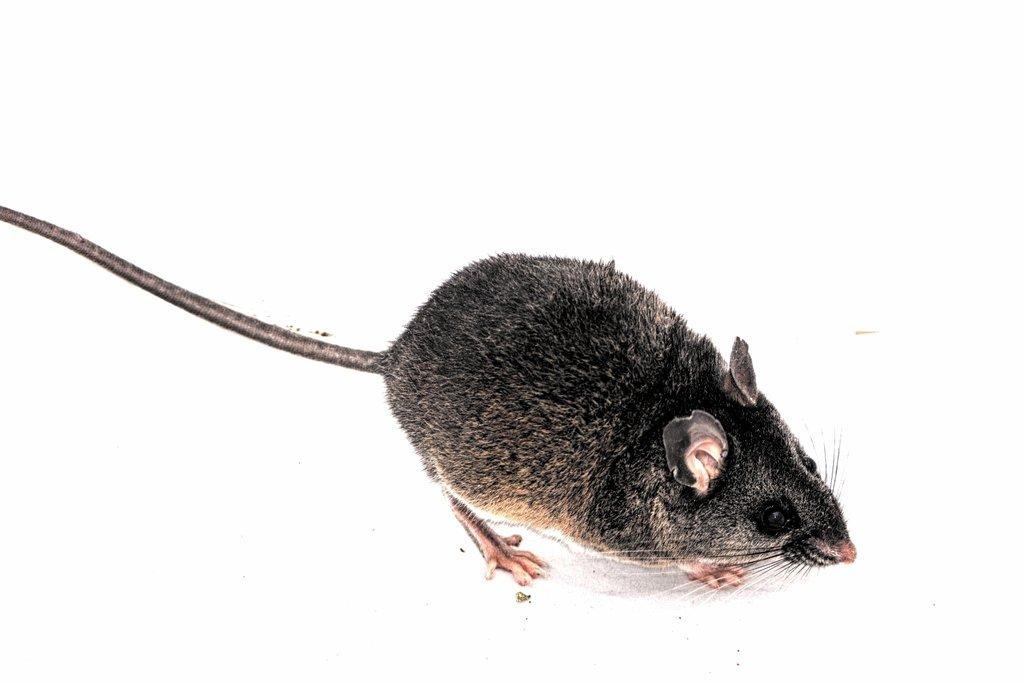
The black rat (Rattus rattus) is more agile and nimble than the Norway rat and is an excellent climber. It nests in roofs, trees and elevated places. Its tail is longer than its body, which makes it easy to distinguish. It is smaller than the Norway rat (100–350 g) and is historically associated with plague transmission through fleas.
Black rat life cycle
It reproduces rapidly: females reach sexual maturity at three months, gestation lasts 21 days, and they produce 5–12 litters per year, with 6–14 pups per litter.
Where black rats occur
They occur worldwide and are common in Saudi Arabia, the Gulf, Egypt and across the region, in warehouses, cities and industrial areas.
Damage and risks associated with black rats
They have historically transmitted plague through fleas. Other listed diseases include lymphocytic choriomeningitis, salmonella and leptospira. They contaminate stores of grain, spices and coffee.
Signs of black rats
Signs include large oval droppings (8–20 mm), gnaw marks on walls, wires and packaging, greasy smear marks on walls, footprints, and a distinctive urine odor that glows under UV light.
Where black rats are found
They occur in roofs and building cavities, date-palm farms and nearby fruit trees. They enter buildings through roof openings and neighboring trees.
Black rat control methods
Seal all openings larger than 6 mm with metal or concrete. Raise stored goods off the floor. Use tamper-resistant bait stations and mechanical traps, and monitor continuously.
Black rat control products
Use first-generation anticoagulants (warfarin). For resistant cases, use second-generation products (brodifacoum, bromadiolone). Secure stations are required for second-generation anticoagulants.
Food-facility control requirements
FSSC 22000 V7: rodent droppings or signs in a production area are an immediate non-conformance. A monitoring-station map is mandatory and must be updated regularly. BRCGS: immediate major non-conformance.
A fact about black rats
Before jumping, black rats carefully assess distances and heights. They test a branch with their front feet and calculate an ideal jumping angle. Their climbing ability on electrical wires, using their heels like athletes, puzzled scientists for decades.
Frequently asked questions
Q: What is the fastest way to get rid of black rats?
A: There is no sustainable quick fix. Effective control means sealing entry points, removing food and water sources, using a professional bait program and monitoring continuously.
Q: Are baits alone enough?
A: No. Baits without sealing entry points and removing available food solve the problem only temporarily. Integrated control is essential.