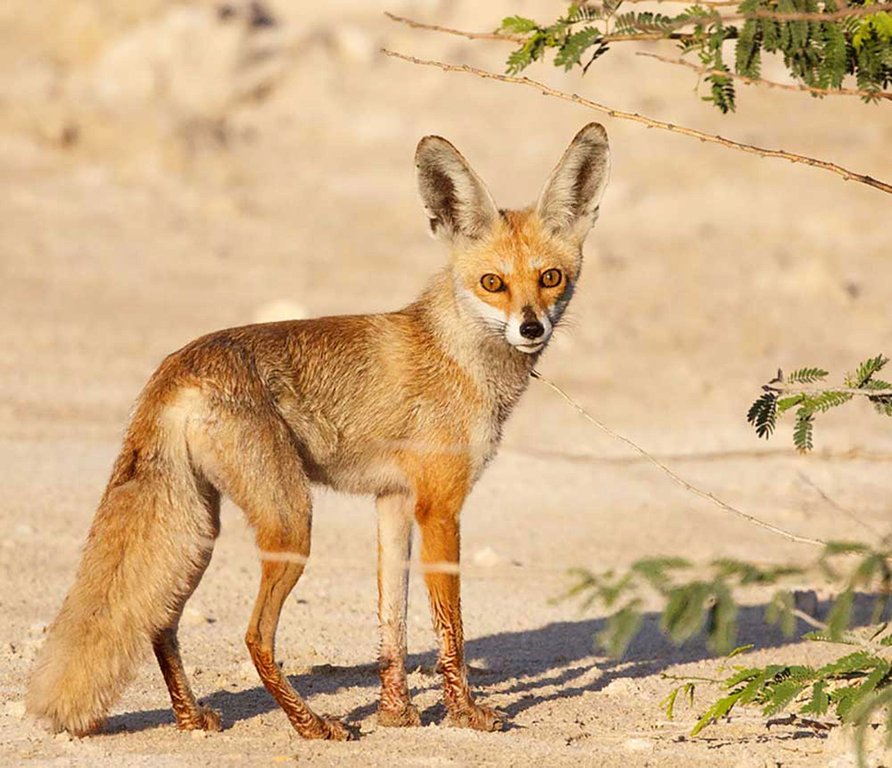
Scientific name: Vulpes vulpes Family: Canidae Order: Carnivora Risk level: Moderate Category: Crawling pests
?What is a red fox
The red fox (Vulpes vulpes) is adapting increasingly well to urban environments. The “city fox” is a growing phenomenon in Gulf and Saudi cities. It preys on poultry, tears open garbage bags and disturbs residents. It is highly intelligent and learns to avoid traps.
Red fox life cycle
Mammals usually reproduce once or twice a year, with 2–8 young per pregnancy, depending on the species.
Where red foxes occur
They occur in urban and rural environments in Saudi Arabia, the Gulf, Egypt and the MENA region.
Damage and risks associated with red foxes
They transmit rabies in some areas, prey on poultry and rabbits, attract ticks and fleas, and cause disturbance and property damage.
Signs of red foxes
Signs include direct sightings, footprints, characteristic droppings and sounds, and damage to poultry or waste.
Where red foxes are found
They occur around poultry farms, in home gardens, near garbage areas and in quiet environments close to urban areas.
Red fox control methods
Work with environmental and wildlife authorities. Manage attractants such as waste and poultry. Use protective fencing and live traps in accordance with regulations.
Red fox control products
Follow local regulations; most of these species are protected or subject to regulated hunting. They may be killed only with a permit.
Food-facility control requirements
FSSC/BRCGS: stray animals around a facility represent a high risk. Recording sightings and having a reporting protocol are mandatory.
A fact about red foxes
The red fox has one of the widest geographic ranges of any mammal on Earth, living from the Arctic to tropical deserts. It has been shown to adapt to the hot Gulf climate in many areas within just two generations.
Frequently asked questions
Q: Are red foxes dangerous?
A: Their risk level is moderate. They transmit rabies in some areas, prey on poultry and rabbits, and attract ticks and fleas. Keep away and notify the relevant authorities.
Q: Who is responsible for removing stray animals?
A: Usually municipalities and animal-environment agencies. Do not try to remove them yourself; some species are legally protected.