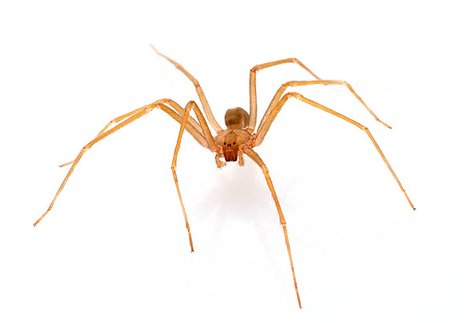
Scientific name: Loxosceles reclusa Family: Sicariidae Order: Araneae Risk level: Very high Category: Crawling pests
? What is a brown recluse
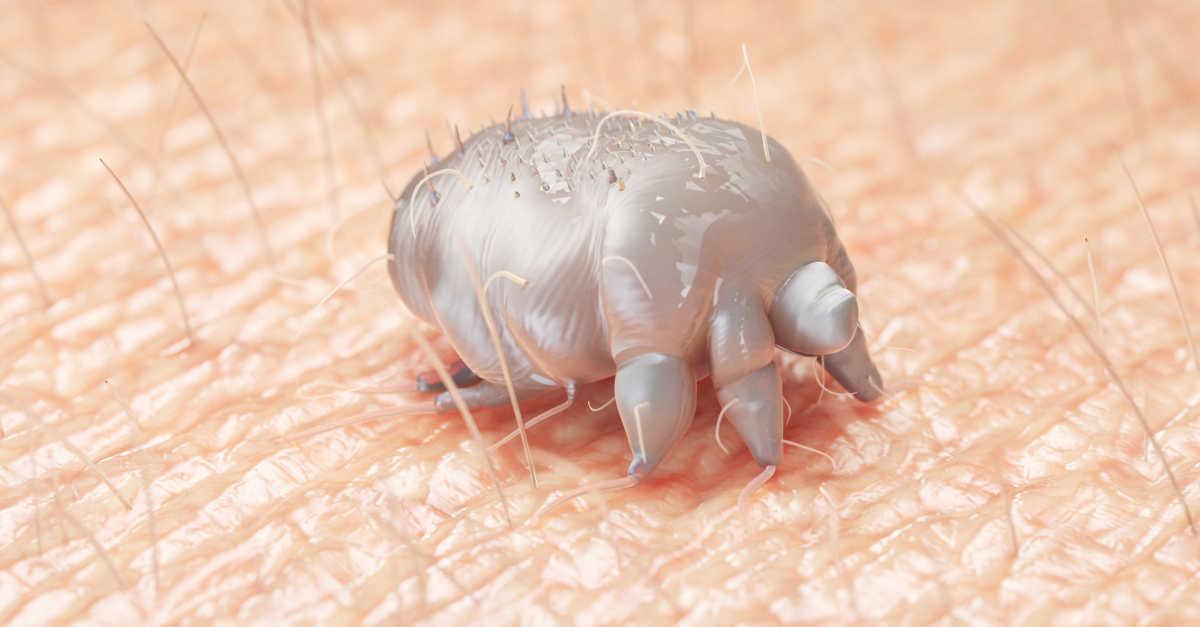
The brown recluse (Loxosceles reclusa) carries a distinctive necrotic venom (sphingomyelinase D) that causes progressive tissue death and may leave a wound that does not heal. It is 6–20 mm long, gray-brown, and has a brown violin-shaped marking on its cephalothorax. It is also called the “violin spider.”
Brown recluse life cycle
Its life cycle progresses from egg to spiderling to adult. Depending on the species, an adult spider may live 1–3 years. Females are larger than males in most venomous species.
Where brown recluses occur
They occur in many regions. Dangerous species are found in the Gulf, Saudi Arabia, Egypt and North Africa.
Damage and risks associated with brown recluses
In 10–15% of cases, its bite causes localized tissue necrosis, with a wound that expands over several weeks. Rarely, systemic loxoscelism occurs, with hemolytic anemia and kidney failure.
Signs of brown recluses
Look for webs in corners and cracks, white eggs, or adult spiders in the dark or when moving furniture.
Where brown recluses are found
They occur in clothing stores, behind old furniture, in folds of unused clothing and in stored cardboard boxes. They live in dark, abandoned areas.
Brown recluse control methods
Conduct careful visual inspections, use UV light to detect webs, place sticky traps, clean thoroughly and seal cracks.
Brown recluse control products
Apply pyrethroids where spiders are present. Use diatomaceous earth dust in cracks. Seal gaps and cracks.
Food-facility control requirements
FSSC/BRCGS: venomous spiders are an occupational safety risk. The control program must be documented.
A fact about brown recluses
Loxosceles spiders do not consider humans prey; they bite only when directly threatened, such as when pressed against clothing or skin. Most bites occur at night when someone unknowingly lies on the spider while sleeping.
Frequently asked questions
Q: Is the brown recluse dangerous?
A: Its risk level is very high. In 10–15% of cases, its bite causes localized tissue necrosis, with a wound that expands over several weeks. Rarely, systemic loxoscelism may cause hemolytic anemia and kidney failure. Avoid approaching one and contact a specialist immediately.
Q: What should I do after a spider bite?
A: Go to the emergency department immediately in cases involving venomous species. Keep the spider for identification if possible. Do not press on the bite