Scientific name: Apodemus sylvaticus Family: Muridae Order: Rodentia Risk level: Moderate Category: Crawling pests
? What is a wood mouse
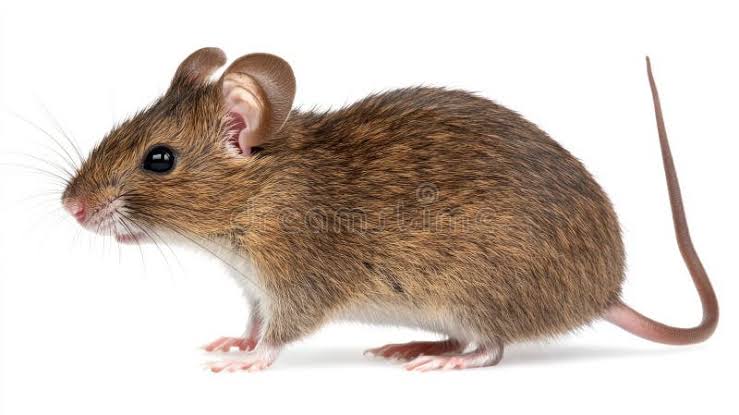
The wood mouse (Apodemus sylvaticus) prefers natural outdoor environments but enters buildings in winter in search of warmth. It differs from the house mouse in its proportionally large eyes and ears, golden-brown color and distinct white belly. It is faster and more alert than the house mouse.
Wood mouse life cycle
It reproduces rapidly: females reach sexual maturity at three months, gestation lasts 21 days, and they produce 5–12 litters per year, with 6–14 pups per litter.
Where wood mice occur
They occur worldwide and are common in Saudi Arabia, the Gulf, Egypt and across the region, in warehouses, cities and industrial areas.
Damage and risks associated with wood mice
They transmit hantavirus (Seoul virus variant) and lymphocytic choriomeningitis. In typical infestations, they contaminate food less than house mice.
Signs of wood mice
Signs include large oval droppings (8–20 mm), gnaw marks on walls, wires and packaging, greasy smear marks on walls, footprints, and a distinctive urine odor that glows under UV light.
Where wood mice are found
They occur around rural buildings and in gardens during winter, in wall cavities, under floors and in cool storage areas. They often leave in spring.
Wood mouse control methods
Seal all openings larger than 6 mm with metal or concrete. Raise stored goods off the floor. Use tamper-resistant bait stations and mechanical traps, and monitor continuously.
Wood mouse control products
Use first-generation anticoagulants (warfarin). For resistant cases, use second-generation products (brodifacoum, bromadiolone). Secure stations are required for second-generation anticoagulants.
Food-facility control requirements
FSSC 22000 V7: rodent droppings or signs in a production area are an immediate non-conformance. A monitoring-station map is mandatory and must be updated regularly. BRCGS: immediate major non-conformance.
A fact about wood mice
Wood mice are among the most capable mice at retrieving cached food. Throughout autumn they hide thousands of seeds and grains in different places and remember most of them with remarkable accuracy through winter, making them a well-studied example of spatial memory.
Frequently asked questions
Q: What is the fastest way to get rid of wood mice?
A: There is no sustainable quick fix. Effective control means sealing entry points, removing food and water sources, using a professional bait program and monitoring continuously.
Q: Are baits alone enough?
A: No. Baits without sealing entry points and removing available food solve the problem only temporarily. Integrated control is essential.